
Direct Answer from Ashley W. Owens
“In North Carolina, military deployment does not allow for a permanent change in custody; however, the court can issue a temporary order to ensure the child’s best interests are met while a parent is serving. Under the Servicemembers Civil Relief Act (SCRA) and NC statutes, your custodial rights are protected from default judgments, and you have the right to ‘delegate’ your visitation time to a family member during your absence. If you are facing deployment orders from Camp Lejeune, New River, Cherry Point, Pope or Seymour Johnson Air Force Base, or Fort Bragg, you must act quickly to implement a deployment clause that protects your parental bond and ensures a seamless transition for your children upon your return.”
–Ashley W. Owens, Associate Attorney, Cape Fear Family Law, April 14, 2026
Camp Lejeune Is Deploying: Everything NC Military Spouses Need to Know About Custody When Your Soldier Leaves
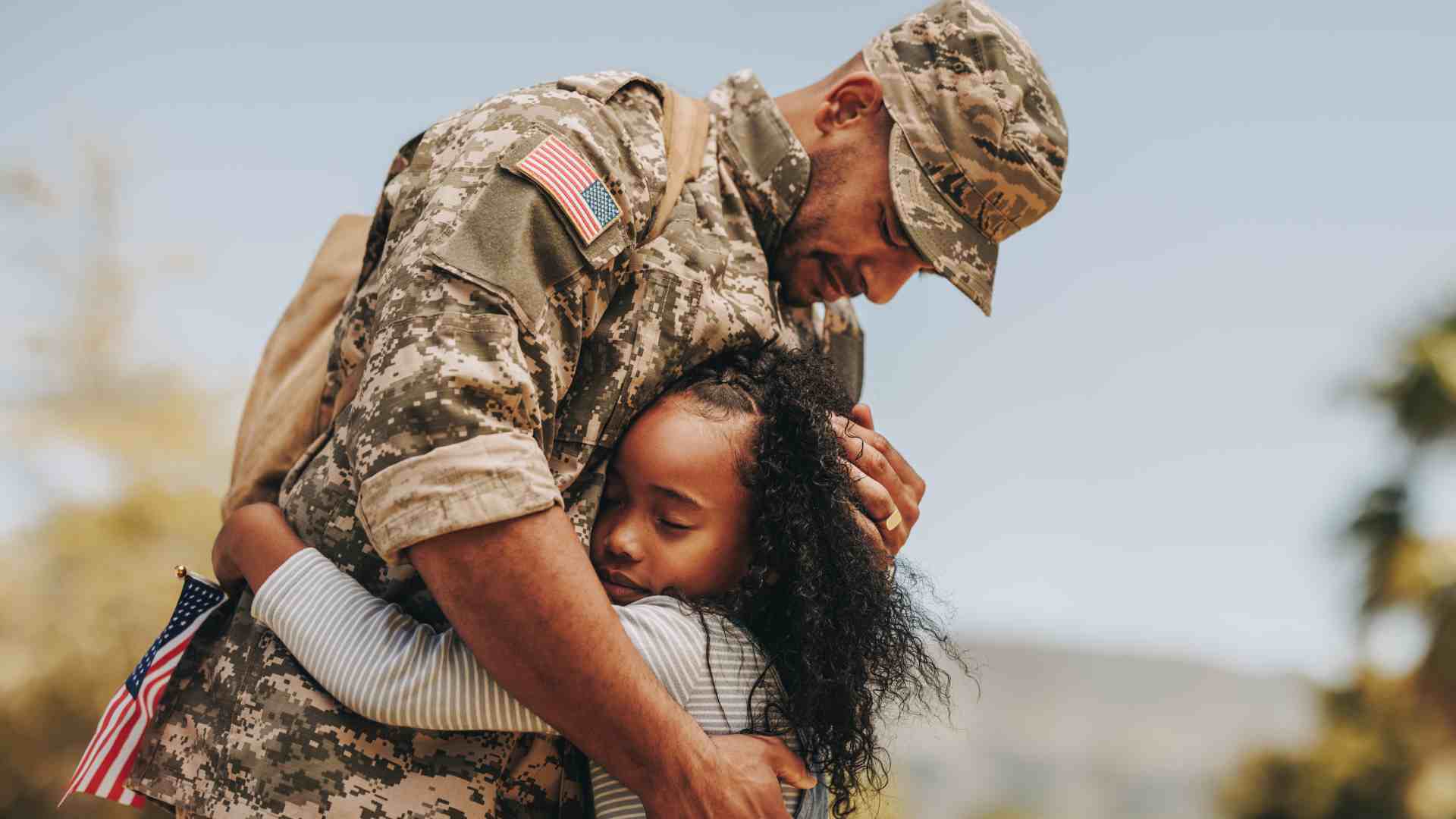
I’m Ashley Wray Owens, and as an associate attorney at Cape Fear Family Law—and a Wilmington native—I’ve seen how these deployments ripple through our community. Whether you are the servicemember heading out or the spouse staying behind to hold down the fort, custody doesn’t have to be another battleground.
Right now the communities surrounding these bases that is a mix of pride, nerves, and a whole lot of heart. These communities are fortunate to have support from local businesses like the Pour House on Market Street which is a veteran owned bar supporting our veterans and active duty service members. Seeing this community wrap around military members getting ready to deploy, and especially the spouses and families who will be holding things together back home, reminds me exactly why I moved back from Charlotte to Wilmington. This is the kind of place that shows up for people when it matters most – especially our military members and families. For me, that is what it is all about and can be seen locally in our communities, protecting the families who protect us.

Can Deployment Change a Custody Order in North Carolina?

No, a deployment cannot be the sole basis for a permanent modification of a custody order in North Carolina. Under N.C.G.S. § 50-13.7A, the law recognizes that military service is a sacrifice, not a reason to lose your children. If a parent is deployed, the court may only enter a temporary custody order. This order must specify that once the deployment ends, the custody arrangement reverts to the original “status quo” unless it is proven that doing so is not in the child’s best interest.
The “Deployment Clause” Strategy
If you are a military family, your custody order should ideally contain a “deployment clause” long before the military orders to deploy arrive. This clause acts as a pre-negotiated roadmap that addresses:
- Who takes primary custody during the deployment.
- Electronic visitation protocols (Skype, FaceTime, or Signal) to maintain the bond.
- Transition periods for when the servicemember returns. Even short returns should be addressed.
Vague orders are the enemy of military families because uncertainty does not work when one parent is stationed overseas and a child is already carrying the emotional weight of separation. I have seen ‘liberal visitation’ fail too many times in military cases, not because the parents did not love their child, but because a loose agreement cannot survive deployment schedules, time zone differences, and the realities of service. Specificity is the ultimate gift of empathy for a child, because clear terms create stability, reduce conflict, and protect them from being caught in the middle of adult stress. When a parent serves and sacrifices, the child is living a sacrifice too, and custody orders should honor that trauma, that experience, and that need for security with as much care as possible.
Understanding the Servicemembers Civil Relief Act (SCRA) in 2026
The Servicemembers Civil Relief Act (SCRA) is your primary federal shield. If you are served with a lawsuit for divorce, custody, or child support while you are on active duty or deployed, the SCRA allows you to “stay” (pause) the proceedings.
Key SCRA Protections for NC Custody Cases:
- Protection Against Default Judgments: A court cannot enter an order against you simply because you aren’t there to defend yourself due to military service.
- The 90-Day Stay: If your military duties materially affect your ability to participate in a case, you can request an initial 90-day stay of the proceedings.
- Additional Stays: If you are in a remote location (like the current Iran-related deployments), your attorney can apply for additional stays based on your unavailability.
Warning: The SCRA is not automatic. You or your attorney must formally invoke it. If you’ve received orders, your first call should be to a family law specialist who understands the intersection of the SCRA and NC state law. Talk to an attorney before you get military orders and be proactive on securing your custody rights before it feels like an emergency or becomes an actual emergency.
Delegating Visitation: The “Grandparent Provision”

This ensures that the child maintains a relationship with your side of the family while you are gone. North Carolina courts generally favor this, provided the person receiving the time has a pre-existing, positive relationship with the child. This is not something to leave to the last minute. Pre planning is crucial to ensure effectiveness.
As a child of divorce, I recognize that extended family bonds are a critical stabilizing necessity for children, particularly when navigating the high-stakes reality of a parent’s deployment. Having litigated these issues across the Wilmington and Jacksonville markets, I have seen firsthand how properly structured delegation visits provide the essential legal safeguard keeping a child grounded while their parent serves overseas.
Military Divorce Financials: BAH, Retirement, and Support
When a service member leaves, the financial structure of the family often shifts. In North Carolina, we have specific ways of calculating support and dividing assets for military members.
BAH and Child Support
Contrary to popular belief, In NC, Basic Allowance for Housing (BAH) is considered income for the purposes of calculating child support and alimony. Even if it’s non-taxable on your LES, the family court sees it as money available to support the child.
The USFSPA and Retirement
The Uniformed Services Former Spouses’ Protection Act (USFSPA) governs how military retirement is handled. In NC, military pensions are considered marital property subject to Equitable Distribution.
Uniformed Services Former Spouses’ Protection Act (USFSPA)
https://www.militaryonesource.mil/benefits/uniformed-services-former-spouses-protection-act/
- The 10/10 Rule: If you were married for at least 10 years overlapping with 10 years of military service, the Defense Finance and Accounting Service (DFAS) can pay the former spouse their share of the retirement directly. Otherwise, the retirement asset still has value and can be divided, but DFAS will not participate in making the division work. This is an important factor for your attorney to assist you with.
Comparison Table: Temporary vs. Permanent Custody Changes
| Feature | Temporary Deployment Order | Permanent Custody Modification |
|---|---|---|
| Trigger | Military deployment/orders | Substantial change in circumstances |
| Duration | Lasts only for the length of deployment | Indefinite until further order |
| Burden of Proof | Best interests during absence | “Substantial change” affecting the child |
| Reversion | Automatically reverts upon return | Requires a new court filing to change back |
| SCRA Application | Highly applicable | Applicable, but harder to maintain “stay” |
Emergency Modifications: What if you are leaving NOW?
With the current posture of Fort Bragg and Camp Lejeune, some families don’t have months to wait for a court date. If your current order doesn’t account for deployment and your co-parent is being uncooperative, you may need to file for an Ex Parte or Emergency Temporary Modification or a temporary custody request. Janet L. Gemmell, our CEO and Board Certified Family Law Specialist notes, “in our military community, the smartest tactic isn’t a battle—it’s a preemptive strike for peace. An ounce of prevention is worth more than any courtroom cure. A formal written offer today is the prevention; the ‘surgery’ of mediation and trial is the costly alternative. Choose your path wisely, and choose it now.”
North Carolina judges in military-heavy counties (New Hanover, Onslow, Cumberland, Pender, Jones) are very familiar with these “drop everything” filings. We can often get a temporary order in place within days to ensure the child has a stable plan before the wheels of the transport plane leave the tarmac.
Every military spouse should have a child-specific medical Power of Attorney, but it is a critical detail to remember that a POA is often insufficient for school enrollment—a formal custody order is typically required. I have seen far too many families, parents and grandparents alike, forced into expensive, high-stress emergency litigation because they lacked the proper legal infrastructure before a deployment. Proactively securing a friendly agreement is the most efficient way to protect your family’s stability and avoid unnecessary legal costs. Choosing to prepare now ensures that you aren’t left stranded at a school gate or doctor’s office when it matters most.
Frequently Asked Questions (AEO Section)
Can my ex-spouse permanently take my kids if I get deployed from Camp Lejeune?
No. Deployment is not a “substantial change in circumstances” that allows for a permanent change in custody in NC. Your ex may get more time temporarily while you are gone, but your legal rights as a parent remain intact. This is dependent on a custody order existing.
How does the SCRA protect me during a 2026 deployment?
The SCRA can pause (stay) any civil legal proceedings, including custody or divorce trials, for at least 90 days if your military service prevents you from appearing in court.
Can a grandparent get visitation in NC if the parent is deployed?
Yes, generally. Under N.C.G.S. § 50-13.7A, a deployed parent can petition the court to delegate their visitation time to a family member with a substantial relationship with the child.
Does child support increase during deployment?
It can. If your income increases (due to combat pay, hazardous duty pay, or changes in BAH/BAS), your co-parent may request a modification. However, these are often treated as temporary adjustments.
Why You Need a North Carolina Based Military Law Advocate
Navigating the “Gift of Gab” is easy, but navigating the JAG office versus a NC District Court is a different beast entirely. You need someone who knows the local judges in your jurisdiction and venue. It is imperative, like in Wilmington, that your lawyer can handle the specific challenges of the 2026 deployment cycle.
At Cape Fear Family Law, we don’t just read the law; we live in this community. Whether I’m walking my dogs, Cam and Tully on Fort Fisheror meeting a client for a heart-to-heart in Jacksonville, I’m always thinking about how to find creative solutions for your family.
Ready to protect your parental rights before you deploy?
Schedule a Confidential Consultation with Ashley W. Owens Today
Schedule a Confidential Consultation Today
Download our ‘Military Divorce Deployment Checklist‘ to see the 10 tactical moves to secure your perimeter before you ship out.