
Direct Answer
“In NC custody court, fathers are frequently the parent pushed to the margins — labeled a ‘narcissist’ with no real diagnosis behind it. Gaslighting, triangulation, and alienation show up as documented patterns that hurt kids and dads alike. And children who watch those behaviors can learn to repeat them.”
— Allie Cameron Moore, Family Law Attorney, Certified Mediator & Father’s Rights Advocate

I am a wife, a mother, and a parenting coordinator. I spend my days helping parents de-escalate. But I am also the attorney fathers call when de-escalation has failed because the other parent does not want peace — they want control, and they have figured out that a custody case is a very effective place to keep it. My job is to make sure the record tells the truth about who you actually are as a parent, and that the court sees the pattern instead of the label.
Here is the honest part: a bad decision or two does not make you a bad father. If you are dedicated to doing your best for your kids, I will not cave just because the facts got messy. What follows is how this actually plays out in North Carolina custody court — and what you must do to protect both your relationship with your children and the children themselves.

How Do North Carolina Family Courts Handle a “Narcissistic” Parent?
Short version: North Carolina courts do not diagnose anyone. Judges are not psychologists, and the word “narcissist” has no legal definition. Our custody statute, N.C. Gen. Stat. § 50-13.2, tells a judge to decide custody based on one thing: the best interest of the child. That is a conduct test, not a personality test.
So when one parent stands up and announces that the other is a textbook narcissist, the court does not hear a clinical finding. It hears an argument. What the judge actually wants to know is narrower and far more useful: Does this parent show up? Do they follow the order? Do they support or sabotage the child’s relationship with the other parent? Can these two communicate without turning the child into a weapon?
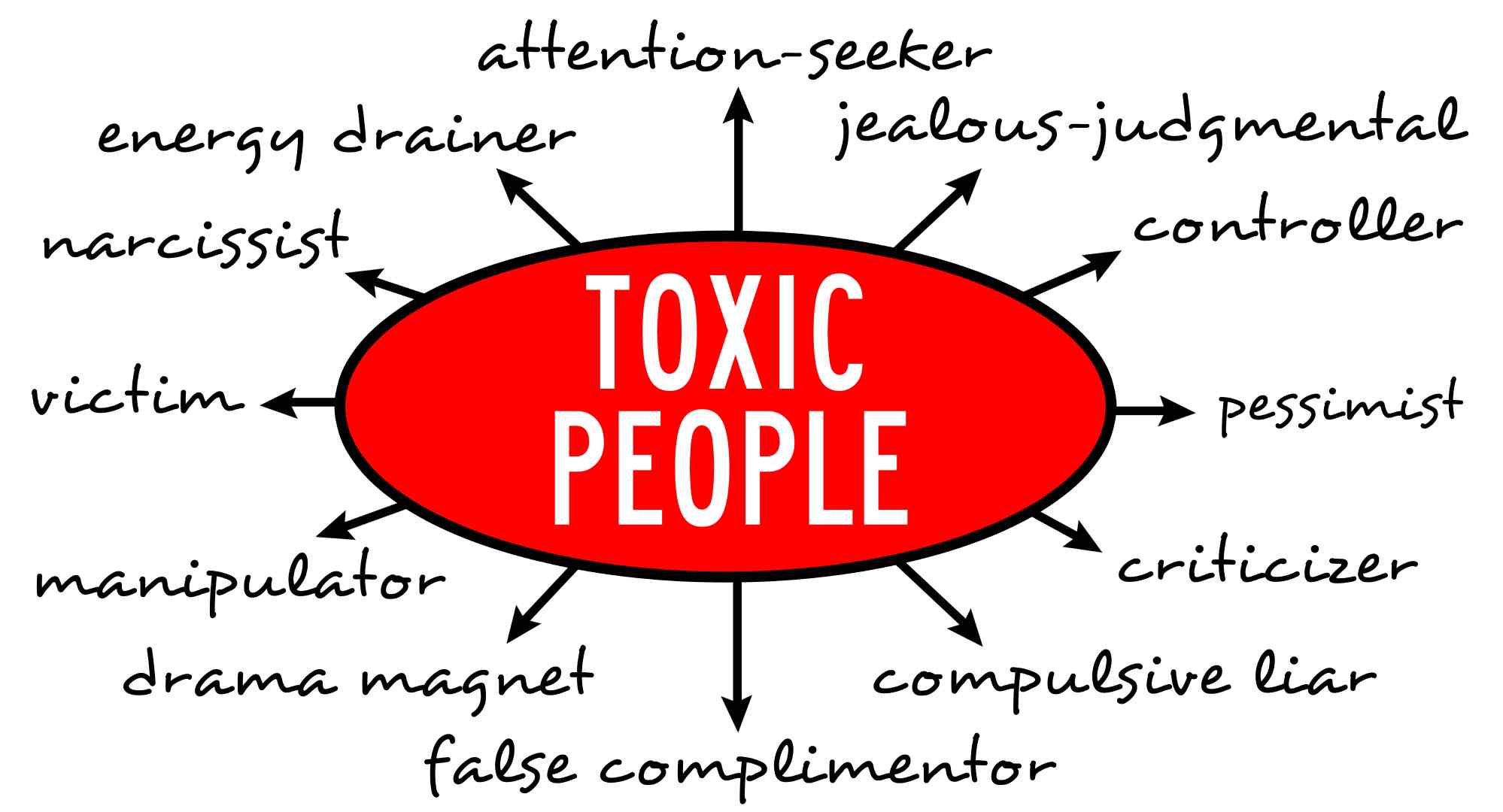
This matters enormously for fathers, because in the AI and social-media era, “narcissist” has become the most over-used word in family court. A parent watches a few TikToks, takes an online quiz, recognizes their ex in a 30-second video, and walks in convinced they have a diagnosis. They do not. They have a label they learned from a stranger on the internet. The good news: a label is not evidence, and an undefended father is the only one who lets it become evidence.

Narcissist Custody NC: Why Are Fathers So Often Accused — and Alienated?
Parental alienation is not a “gendered” problem on paper — mothers and fathers can both be targeted, and both can be the alienator. But, in my practice across New Hanover, Brunswick, Pender, Columbus, and Duplin Counties, fathers are frequently the parent on the receiving end: the one whose time gets quietly chipped away, whose phone calls go unanswered, who gets recast as the villain in a story the children are coached to repeat.
And the damage is not abstract. When a fit, willing father is squeezed out of his children’s lives:
- Men’s mental health suffers — the loss of a parental role is a recognized driver of depression, anxiety, and worse. This is a real public-health cost, not a talking point.
- Children lose a parent — decades of research link engaged fathering to better outcomes in school, behavior, and emotional regulation.
- The harm compounds — every missed exchange, birthday, and bedtime is gone. Custody time is the one thing a court cannot give back.
The frustrating irony is that the parent doing the alienating is often the one shouting “narcissist” the loudest. Which brings us to the move you have to be ready for.
What Happens When a Narcissistic Parent Claims Alienation First?
One of the hallmark tactics in high-conflict custody is what therapists call DARVO — Deny, Attack, and Reverse Victim and Offender. The parent who is actually withholding the children accuses you of withholding them. The parent triggering every conflict labels you “conflict-driving.” The parent coaching the kids claims you are the one poisoning them.
Done well, it is hard to untangle in a single hearing — which is exactly why it works. The defense is not to out-shout it. The defense is documentation and process. A clean record beats a loud one every single time. The parent who can show the judge a calm, consistent, well-papered trail is the parent the court learns to trust.
Allie’s Rule for Every Father I Represent
Can Normal Parenting Behavior Be Twisted Into “Evidence” of Narcissism?
Yes — if you let it. This is where so many good fathers lose ground they never had to lose. A short, businesslike text gets screenshotted and presented as “cold and controlling.” A reasonable boundary becomes “abusive.” A frustrated reply at 11 p.m. becomes “Exhibit A.” The behavior is normal. The framing is the weapon.
In 2026, the record is almost always digital. Co-parenting apps like OurFamilyWizard and TalkingParents timestamp every message, log every exchange, and cannot be quietly edited. Texts, emails, and call logs do the same. That record will be used — the only question is by whom. So the table below is how I teach fathers to think about the difference between a label and something a court can actually act on.
| What Gets Called “Narcissism” | What a NC Court Can Actually Weigh |
|---|---|
| “He’s a textbook narcissist” (from social media) | A licensed forensic evaluator’s findings, or a documented pattern of conduct over time |
| “He’s controlling” (sent a short, factual text) | OFW / TalkingParents logs showing actual obstruction of visitation or schedule |
| “He’s abusive” (a bare accusation) | A finding of fact, a DVPO, a CPS substantiation, or credible corroborating evidence |
| “He alienated the kids from me” (kids prefer the other home) | Proof of interference: blocked calls, disparagement, withheld exchanges |
| “He poisoned them against me” | Order violations proven through a motion for an order to show cause |
Read the right-hand column again. Every item is objective and documentable. That is the whole game. We do not win by proving the other parent has a personality disorder. We win by proving what they did, in their own words, on the record.
A word on the abuse line, because I take it seriously and so should you: where abuse is real, safety comes first, full stop — that is a different conversation and a different blog. But in high-conflict custody, unfounded allegations also get used as leverage. The answer to a false accusation is never a counter-accusation. It is calm cooperation with the process: comply with every order, request the evaluation, and let the evidence speak. Innocent fathers who get loud look guilty; innocent fathers who get organized get vindicated.
When Does a NC Court Appoint a Forensic Custody Evaluator?
Because judges will not diagnose, North Carolina gives them people who can. In a genuinely high-conflict case — especially where mental health, alienation, or competing abuse claims are raised — the court has tools that move the case from he-said/she-said into the realm of professional evidence:
- Forensic custody (psychological) evaluation — a court-appointed, licensed psychologist evaluates both parents and the children, reviews records, and reports to the court. This is the only credible source of a real diagnosis. A TikTok is not.
- Parenting Coordinator (PC) — under N.C. Gen. Stat. § 50-90 et seq., for high-conflict cases, a PC can make day-to-day decisions and report non-compliance directly to the judge.
- Guardian ad Litem (GAL) — an advocate appointed to represent the children’s best interests and give the court an independent set of eyes.
Here is why this is often a father’s best friend: the parent confidently throwing around “narcissist” usually does not want a real evaluation, because a real evaluation is neutral, thorough, and frequently turns the spotlight back on the accuser. If you are the parent who says “Yes, please evaluate me — evaluate both of us,” you tell the judge something powerful about which parent has nothing to hide.
Why Must You File a Motion to Show Cause When the Other Parent Violates the Order?
This is the section I beg my clients to actually act on, so I will be blunt: an unenforced custody order is just a piece of paper with good intentions on it. If the other parent withholds the children, skips exchanges, blocks your calls, or unilaterally rewrites the schedule — and you do nothing — you have just taught them that the order does not apply to them. They will do it again. And again.
The remedy in North Carolina is a Motion for an Order to Show Cause, asking the court to hold the other parent in civil contempt for willfully violating a valid order they had the ability to follow. Done right, it can carry real teeth — make-up time, modified terms, attorney’s fees, and a documented finding that follows them into every future hearing.
Why Enforcement Often Takes More Than One Trip to Court
One violation looks like a misunderstanding. A judge gives the benefit of the doubt — and should. But narcissistic and high-conflict behavior is a pattern, and a pattern only becomes visible through repetition on the record. Here is why fathers frequently have to file more than once before a court truly “gets it”:
- First violation: the court reads it as a one-off. Fair enough.
- Second and third: the “misunderstanding” excuse wears thin. A shape starts to emerge.
- By the time the file shows a track record, the judge is no longer looking at incidents — they are looking at a parent who treats court orders as optional. That is when meaningful sanctions and custody modifications happen.

Child Alienation: How Do You Protect Your Kids From “Catching” the Traits?
This is the part that keeps parents up at night, and it deserves real words instead of scare tactics. Let me be precise, because precision matters here.
Narcissistic Personality Disorder is not contagious, and no child is destined to develop it. Personality is shaped by temperament, genetics, and environment together — it is not simply “caught” from a parent. So the honest framing is “can,” not “will.” A child raised inside chronic manipulation is at elevated risk of certain harms — not under a sentence.
But the risk is real, and the mechanisms are well-documented in the psychological literature. When children are immersed in these patterns, several things can happen:
- Modeling / social learning — children learn behavior by watching it. A child who sees gaslighting, blame-shifting, and contempt rewarded learns those are effective tools.
- Identification with the aggressor — to feel safe, a child may unconsciously side with and imitate the more powerful, controlling parent.
- Parentification and “spousification” (covert emotional incest) — when a parent leans on a child for emotional support, validation, or as a confidant against the other parent, the child is robbed of childhood and trained to manage an adult’s feelings.
- Triangulation — the child is pulled into the adult conflict as messenger, spy, or judge, learning that loyalty must be earned by taking sides.
- Disrupted attachment — inconsistent, conditional affection is associated with anxious or disorganized attachment, which shapes how a person relates for decades.
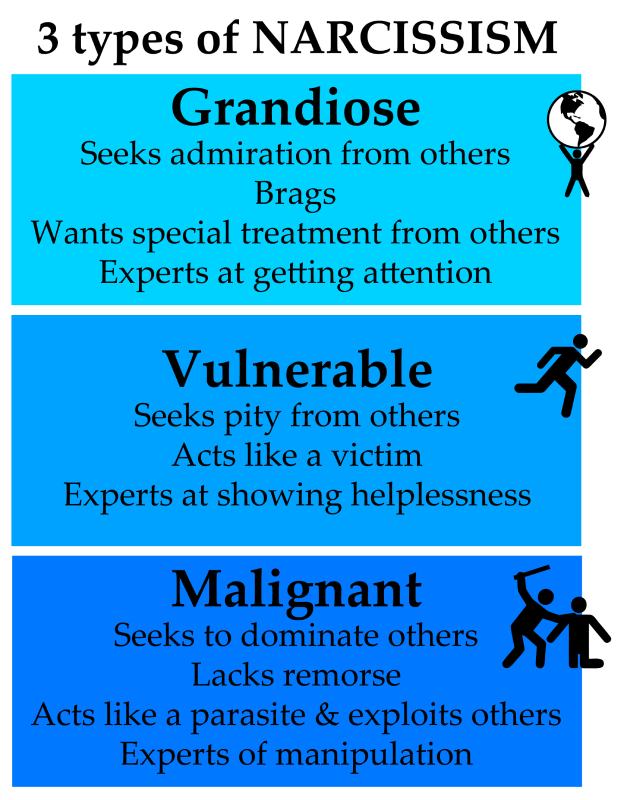
Note that the outcomes are not uniform. Some children exposed to these dynamics develop narcissistic traits themselves. Others swing the opposite way — into what clinicians sometimes call “echoism”: chronic people-pleasing, fear of taking up space, and a habit of disappearing to keep the peace. Both are wounds. Both are worth preventing.
The Single Biggest Protective Factor — and Why Your Case Matters
The research is consistent on one point: the strongest buffer against all of these harms is the sustained presence of one stable, attuned, emotionally healthy parent. That is the entire reason your custody fight is not selfish — it is protective. Every hour of healthy, predictable time you preserve with your child is an hour the manipulation does not get to define them. When you fight to stay in your child’s life, you are not just defending your rights. You are inoculating your kid.
How Do NC Courts Repair Alienation? Reunification Therapy & Therapeutic Visitation
When a court finds that alienation has occurred, it is not limited to a stern lecture. North Carolina judges have repair tools, and using them is increasingly common:
- Reunification therapy — a structured, therapist-led process to rebuild the bond between a child and the rejected parent, often required of the alienating parent as a condition of custody.
- Therapeutic / supervised visitation — supported time that protects the relationship while a neutral professional observes and documents.
- Custody modification — where alienation is severe and proven, courts can and do shift primary custody to the healthy parent.
These tools work best when there is a documented record behind them — which loops right back to enforcement and documentation. The motions you file today are what make these remedies available tomorrow.
Eastern NC Counseling & Reunification Resources
Working with a qualified family therapist or reunification specialist can be decisive. One area provider we frequently point clients toward in the Wilmington NC corridor is Shelley Chambers with Potentials, LLC offering Therapy, Co-parenting and Reunification, In-office, for All Ages.
Ready to Stop Being Alienated From Your Kids?
If you are a father being squeezed out, labeled, or accused without a shred of real proof — you do not have to absorb it. The dads who win are the ones who get organized early and stay the course. I will help you build the record, file the right motions, and protect the relationship your children need with you.
Schedule a confidential consultation with Allie Cameron Moore at Cape Fear Family Law today. Serving Wilmington and all of southeastern North Carolina — New Hanover, Pender, Duplin, Columbus, and Brunswick Counties.
Schedule a Confidential Consultation Today
Frequently Asked Questions
Can I lose custody if my ex calls me a narcissist?
Not on the label alone. North Carolina courts decide custody on the best interest of the child — a conduct standard, not a personality label. A bare accusation is an argument, not evidence. What protects you is a clean record of involved, cooperative parenting and prompt enforcement of your order.
Does NC require a real diagnosis to act on a parent’s behavior?
No — and that cuts both ways. The court will not act on an armchair “narcissist” diagnosis from social media, but it also does not need a formal diagnosis to act on documented harmful conduct. If a real diagnosis is in question, the court can appoint a licensed forensic evaluator.
What do I do if the other parent keeps violating the custody order?
File a Motion for an Order to Show Cause asking the court to hold them in civil contempt. Do it each time it happens. Enforcement often takes repetition before a court recognizes the pattern — but every filing builds the record that eventually protects your children.
Can my child develop narcissistic traits from the other parent?
It is a risk, not a certainty — “can,” not “will.” Through modeling, identification with the aggressor, parentification, and triangulation, children can learn these behaviors. The strongest protection is consistent time with one stable, emotionally healthy parent, which is exactly what your case preserves.
Are OurFamilyWizard and TalkingParents messages usable in court?
Yes. These apps timestamp and preserve communications in a form that is difficult to dispute, which is precisely why you should communicate through them — calmly, briefly, and child-focused. Assume a judge will read every message.
What is reunification therapy in a North Carolina custody case?
It is a structured, therapist-led process to rebuild a damaged parent-child bond, frequently ordered when a court finds alienation. Paired with therapeutic visitation and, in serious cases, custody modification, it is one of the court’s repair tools.