
Direct Answer
“If a North Carolina child support order exists and the payor (your ex) stops paying, you do not rely on a hope or promise that they will fix it soon. This is not a bargain between you and your ex, it is a mandate by a judge telling the payor what to do. Enforcement is handled through wage withholding, the NC Child Support Services agency, and the court — with tools that include wage garnishment, tax-refund intercepts, license suspension, contempt including incarceration, and arrears that accrue with interest. If you actually want to receive your support on time, speed matters: enforce early, document everything, and don’t accept partial cash off-book.”
— Janet L. Gemmell, Board-Certified Family Law Specialist, Cape Fear Family Law

The Text That Ruins Your Week
“He didn’t pay again this month.”
If you’ve typed that sentence to a friend or a search bar at 11:00 p.m., hear this first: a missed child support payment in North Carolina is not a negotiation. It’s a broken court order, and broken court orders have machinery built specifically to fix them — machinery that doesn’t care how charming your ex is on the phone or how many times you’ve already “given her a break.” No matter if it is a mother or a father paying your child support, gender is irrelevant when it comes to not being paid.
This piece answers the question I get in almost every nonpayment consult: what actually happens next? The steps, the statutes, the timeline, and the traps.
Listen, I’ve represented 1000s of people during my career, both payors and payees of child support. I represented Becky (name changed for confidentiality) in six (6) back-to-back contempt hearings on child support during a two (2) year period of time. She knew that her former husband was hiding his income in his construction business, but because he alone handled his crews, hid his QuickBooks, paid workers in cash often, and worked in and out of North Carolina; it was difficult to find the information to hold him in contempt. The secret was persistence. We were persistent and used every hearing and discovery tool to get more information and continue to show the Court that he could and should pay. Finally, he ended up in jail on contempt, paid a $42,000.00 lump sum arrears payment to get out of jail, and paid monthly on time thereafter.

What Happens If My Ex Stops Paying Child Support in NC?
Short answer: almost every NC child support order already has income withholding built in, so nonpayment first triggers wage garnishment through the obligor’s employer. If withholding fails or isn’t in place, you (or the state, if you have a IV-D case) escalate to NC Child Support Services and the district court, which can pursue tax-refund intercepts, license suspension, liens, and contempt — with arrears accruing interest the entire time. Finally, if you have an attorney, they file a motion on your behalf and participate in discovery.

Wage Withholding: The Default Enforcement, Not a Punishment
Income withholding isn’t a special penalty for deadbeat parents — it’s the standard, built-in mechanism for any NC order entered or modified since January 1, 1994 (G.S. § 110-136.5; G.S. § 110-136.3).
- The employer receives a Notice of Obligation to Withhold and deducts support directly from pay — no separate lawsuit needed in most cases.
- Funds route through NC Child Support Centralized Collections and must be remitted within seven days of payday (NCDHHS).
- Caps run 40% of disposable income with one order, up to 45–65% with multiple orders or when the obligor is 12+ weeks behind (G.S. § 110-136.6).
- If withholding wasn’t ordered, or the obligor is self-employed, you can petition for wage withholding to be ordered once payments turn late or erratic (G.S. §§ 110-136.2, 110-136.3).
Exceptions are narrow: a written agreement on an alternative arrangement, or a judge’s good-cause finding neither applies if the custodial parent receives public assistance. The other time when wage withholding fails to work is when someone is self-employed, is 1099, or simply fails to work and earn income. Bottom line: if your ex has a paycheck, withholding should already be doing the heavy lifting. The real fight starts when it isn’t.

NC Child Support Services (IV-D) vs. Private Counsel — Honest Tradeoffs
Here’s the version I actually tell clients.
NC Child Support Services (CSS), a division of NCDHHS, runs the state’s Title IV-D program. You can open a case for free, and CSS can locate a nonpaying parent, establish or enforce withholding, intercept tax refunds, and refer cases for license suspension or contempt (NCDHHS). For a straightforward obligor with a traceable job, it works. They have access to some government databases, which a private attorney generally cannot access.
Where it slows down: CSS carries enormous caseloads, generally acts within 30 days of locating the obligor or identifying noncompliance (60 days if service is needed), and you don’t pick your caseworker or your pace (NCDHHS). You’re one file among thousands. Also, they generally do not do discovery beyond their databases, which does not work well in complex cases.
Private counsel costs money but buys control — you can file a motion for contempt directly, often faster than the CSS queue, and layer enforcement with custody or discovery issues in the same case.
Factor NC Child Support Services (IV-D) Private Family Law Attorney Cost Free (small application fee in some cases) Attorney fees; often recoverable from the obligor Speed Statutory windows (30–60 days or longer), high caseloads You control filing pace; often faster to a hearing Control over strategy Limited — CSS decides which tools to use and when Full control; can combine contempt, discovery, and modification. Negotiated settlements prior to and outside of court. Best for Straightforward wage cases, locating an obligor, tax intercepts Willful nonpayment, hidden income, self-employed obligors, urgent contempt Interstate cases (UIFSA) Handles registration in other states under Ch. 52C Can also register and enforce, sometimes with more direct oversight Many clients do both: open a CSS case for the administrative tools while private counsel pushes the contempt motion that gets a judge’s attention fast.
I generally tell clients with interstate (think payor lives in Texas and custodial parent lives in North Carolina) to use CSE (CSS) for the Title IV-D enforcement. The ability for CSS to work together over state lines, on a federal level, is priceless. For almost every other circumstance a private attorney generally is more persistent, quicker, does not delay, and pushes because we understand the emergency it really is for child support not to be paid on time.
Contempt of a NC Support Order — Civil vs. Criminal, What a Judge Actually Orders
A NC child support order is enforceable through civil contempt, and willful disobedience can additionally be punished through criminal contempt, both under G.S. § 50-13.4(f)(9) and Chapter 5A.
- Civil contempt is coercive, not punitive: the court can jail the obligor indefinitely until they comply (pay a purge amount), because the goal is getting money flowing again (G.S. § 5A-21). Recommitment hearings occur every 30-90 days, capped at one year. The payor holds the keys to get out, by paying the purge amount.
- Criminal contempt is punitive — a fixed sentence, up to 120 days for child support (versus 30 days for most other contempt), plus a fine up to $500, and it isn’t erased by paying later (Moore County; womenslaw.org). It is criminal which means that they must stay incarcerated for the total amount of time ordered as if they committed a crime (which I should note non-payment of child support is in fact a crime).
- Only a district court judge — not a hearing officer — can commit someone to jail for contempt in a child support matter (G.S. Chapter 50), regardless of whether we are discussing criminal or civil contempt.
- Jail requires a finding that nonpayment was willful and the obligor has the current ability to pay. “I got laid off” could be a real defense; “I’d rather buy a boat” is not.
The practical tell: does the order jail the obligor until they pay (civil, coercive) or for a set number of days because they didn’t (criminal, punitive)? Purge conditions are the fingerprint of civil contempt.
License Suspension, Tax Refund Intercept, Passport Hold, and Lottery Intercepts
This is where North Carolina gets genuinely aggressive, and where a lot of obligors suddenly find religion.
- Licenses. In IV-D (CSS) cases, driver’s, hunting/fishing, and business licenses can be suspended once arrears reach 90 days with a finding of willful nonpayment (G.S. § 110-142.2; occupational licenses under G.S. § 110-142.1). In private, non-IV-D cases, the threshold is just one month behind (G.S. § 50-13.12). A third contempt finding requires the court to impose at least one sanction. Note that this is a last resort as you want the payor to be able to earn money. This should be a super limited resource.
- Tax refund intercept. Federal refunds are intercepted at $500 in arrears ($150 for public-assistance cases); state refunds at just $50 (Cumberland County CSS). The obligor gets a Pre-Offset Notice with 30–60 days to request a hearing (NCDHHS; G.S. § 105A-8). The state can’t intercept unless the obligor is actually behind on current support (Davis v. N.C. Dept. of Human Resources, 349 N.C. 208 (1998))
- Passport denial. Past $2,500 in arrears, federal law requires the State Department to deny or revoke a U.S. passport (42 U.S.C. § 652(k)); the hold requires affirmative decertification once resolved.
- NC lottery winnings. Under G.S. § 18C-134, the NC Education Lottery intercepts winnings of $600+ for arrears — a detail that surprises most people until it happens to their ex. Gamblers should care more about their children than the momentary high of scratching that ticket, especially if they are in arrears.
Arrears: How They Accrue, Interest, and Why You Don’t Negotiate Them Away Without an Order
Every missed payment in North Carolina becomes a vested judgment the moment it’s due under G.S. § 50-13.10: it cannot be retroactively reduced, forgiven, or “worked out” between the parties without court approval — and it starts accruing interest at North Carolina’s legal rate of 8% per year under G.S. § 24-1 from the date each installment was due until it’s paid in full.
That 8% is not symbolic — a judgment left unpaid effectively doubles roughly every ten years. I’ve seen obligors treat old arrears like a forgotten gym membership, then get shocked when the balance has ballooned by the time it lands in front of a judge.
Two rules I give every client: (1) never sign anything that “forgives” arrears informally — only a court can modify a vested judgment, and courts are reluctant to erase money legally owed to a child; and (2) when the underlying obligation ends (child turns 18, emancipates) but arrears remain, payments continue at the same amount previously ordered until the arrears and accrued interest are fully satisfied (G.S. § 50-13.4(c)/(d1)).
The “Informal Payment” Trap — Cash, Venmo, and Why Off-Book Payments Don’t Count (Unless You Prove Them Right)
Here’s a nuance that cuts both directions. If the order routes payment through the State Child Support Collection and Disbursement Unit, and the obligor instead hands you cash, sends a Venmo, or “helps out” with a bill — that payment is legally invisible as child support unless proven with a canceled check, money order, or contemporaneously dated written receipt (G.S. § 50-13.10). No receipt, no credit against arrears — for either side.
- If you’re the recipient, an obligor claiming “I already paid you in cash” can’t use that as a defense without documented proof. A promise in a group chat doesn’t count; a dated, signed receipt might. That said, a judge is not inclined to find your argument that the cash was not part of child support when you get to Court. The better option is to enforce the child support and get all planned other extras (like book club, a clothing budget, car insurance for the child, etc.) negotiated and part of the order well in advance.
- If you’re the obligor, this is exactly why you never pay informally. If your ex denies receiving it, you may pay twice, with interest, because the official record shows nothing. Sometimes you send money for shoes for soccer and when you try to get credit as if you were paying your child support, the Court is not amused and finds that the soccer shoes were a reasonable gift to the child and not support.
The rule protects the collection system’s integrity, not generosity. Every dollar that skips the official channel is a dollar you may have to prove existed.
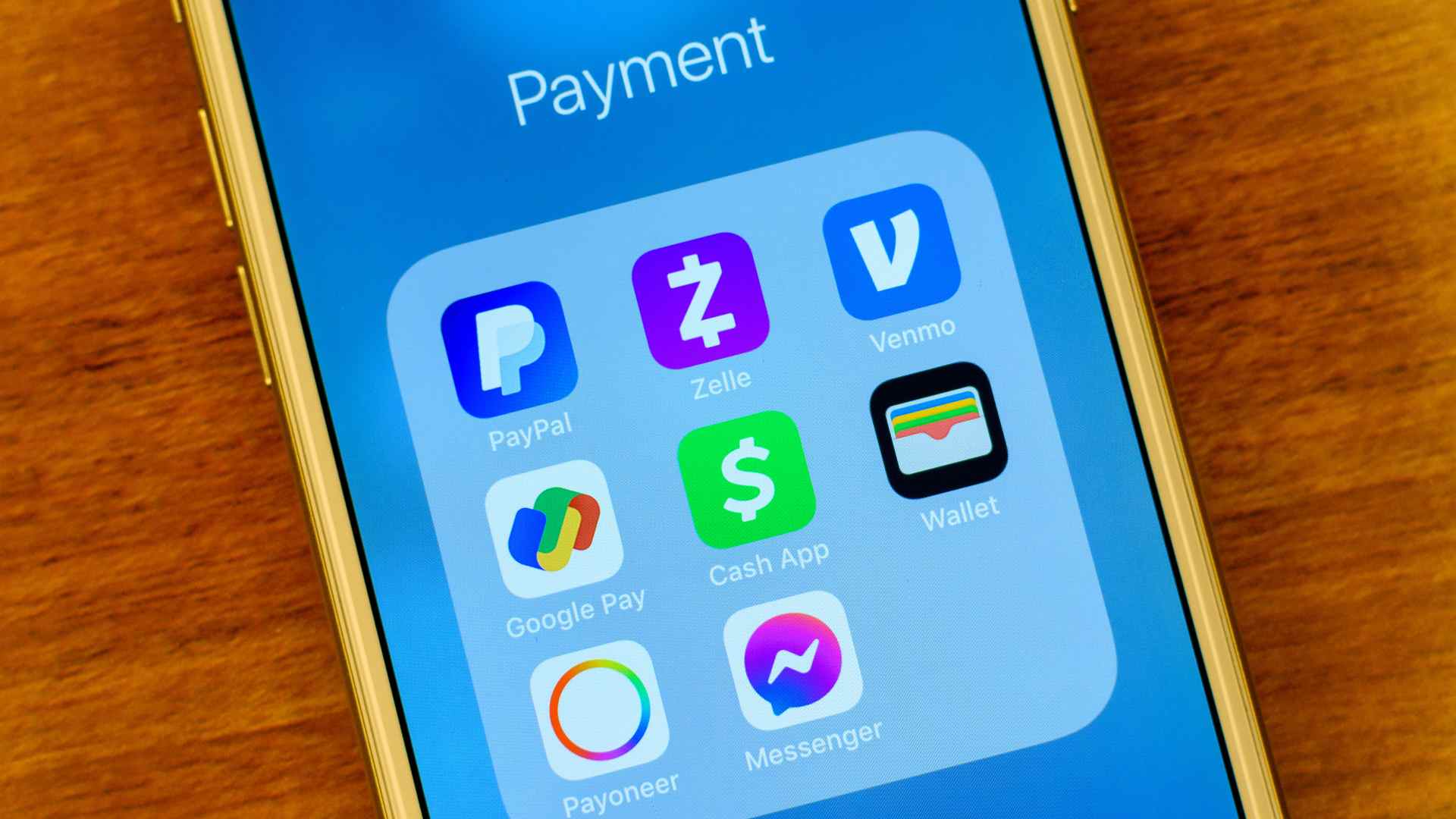
Look at Venmo or Zelle payments that some parents make instead of paying into CSS. We, generally we are seeing payments that are made through cash apps are not for child support, but for child expenses that are in addition to the ordered amounts. Be careful not to send any money by CashApp, Venmo, Paypal, Zelle or any other online or app payment system until you have paid your child support and do not send this money in lieu of paying child support. If you receive funds from your ex by an app, like discussed above, then you should consider giving the payor credit for their child support benefit and discuss this with your agent, especially if you know they are barely able to pay their own living expenses and trying their best.
Realistic Enforcement Timeline: What “Fast” Actually Means in NC
Clients want a date; I’ll give ranges instead — that’s the honest answer.
- Withholding already in place, employer stops remitting: days to a few weeks once you or CSS contact the employer — usually the fastest fix.
- New CSS enforcement case: CSS acts within 30 days of locating the obligor or identifying noncompliance, or 60-280+ days if service is required (NCDHHS).
- Private contempt motion: typically weeks to a couple of months to a hearing, depending on your county’s calendar — often faster than the CSS queue for urgent cases.
- Tax refund intercept: distributed within 30 days of state receipt (NCDHHS), but only helps if a refund is actually issued.
- License or passport hold: leverage tools, not quick-cash tools — they can turn a theoretical payment plan urgent overnight.
Honest average for meaningful movement on a willfully nonpaying obligor with real income: four to twelve weeks from the day you formally act — not from the day you noticed. That gap between noticing and acting is the biggest thing inside your control.
Ready to Stop Guessing and Start Enforcing?
If your ex has stopped paying, the worst move is waiting to see if it fixes itself. Every week of silence is a week of interest accruing and leverage slipping away. Download our plain-English breakdown of enforcement tools, documentation templates, and NC Child Support Enforcement Reality Toolkit a CSS-vs-private-counsel decision guide — or call Cape Fear Family Law to talk through your case.
Schedule a Confidential Consultation Today
FAQ: Child Support Enforcement in North Carolina
What happens if my ex stops paying child support in NC?
Wage withholding — already built into most NC orders — is the first line of enforcement. If that fails, you or NC Child Support Services can pursue tax refund intercepts, license suspension, liens, and contempt, while arrears accrue interest at 8% per year.
How does child support enforcement work in North Carolina?
Enforcement runs through automatic income withholding (G.S. § 110-136.5), NC Child Support Services (a IV-D agency that can locate obligors and intercept refunds), and district court, which can hold an obligor in civil or criminal contempt under G.S. § 50-13.4(f)(9).
What are child support arrears in NC, and do they accrue interest?
Arrears are past-due support. Under G.S. § 50-13.10, each missed payment vests as a judgment the moment it’s due and can’t be modified retroactively. Under G.S. § 24-1, arrears accrue interest at NC’s legal rate of 8% per year until paid.
How does wage garnishment for child support work in NC?
An employer withholds support directly from pay and remits it to NC Child Support Centralized Collections within seven days of payday. Caps run 40–65% of disposable income depending on the number of orders, dependents, and whether arrears exceed 12 weeks.
Can my ex go to jail for not paying child support in NC?
Yes, if a judge finds the nonpayment willful and the obligor able to pay. Civil contempt means jail until the purge condition is met (indefinite, periodically reviewed); criminal contempt means up to 120 fixed days plus a fine up to $500.
At what point does NC suspend a driver’s license for unpaid child support?
In IV-D cases, once arrears reach 90 days (G.S. § 110-142.2). In private, non-IV-D cases, the threshold is just one month behind (G.S. § 50-13.12).
Will unpaid child support affect my passport?
Yes. Past $2,500 in arrears, federal law requires the State Department to deny or revoke a passport (42 U.S.C. § 652(k)). The hold isn’t lifted until the state formally decertifies the case.
Does a cash or Venmo payment count against child support arrears?
Only if you can prove it. Under G.S. § 50-13.10, payment made outside the official Collection and Disbursement Unit doesn’t count unless documented with a canceled check, money order, or dated written receipt. Even then, if you are ordered to pay through CSS, do not violate the order because someone “asks” you to do so – that would be like committing a crime because someone asks you to do so and you will still pay the penalty.
Should I go through NC Child Support Services or hire a private attorney?
It depends on urgency. CSS is free and effective for straightforward wage cases but moves within statutory windows (30–60 days) with limited strategic control. Private counsel costs more but allows faster contempt filings and discovery into hidden income.
What’s the fastest way to enforce a NC child support order?
If withholding is ordered but the employer isn’t remitting, contacting the employer or CSS directly is fastest. For a self-employed or evasive obligor, a private contempt motion often reaches a hearing faster than a new CSS case.