Serving families across Johnston County, Wake County, and the rest of North Carolina
Direct Answer
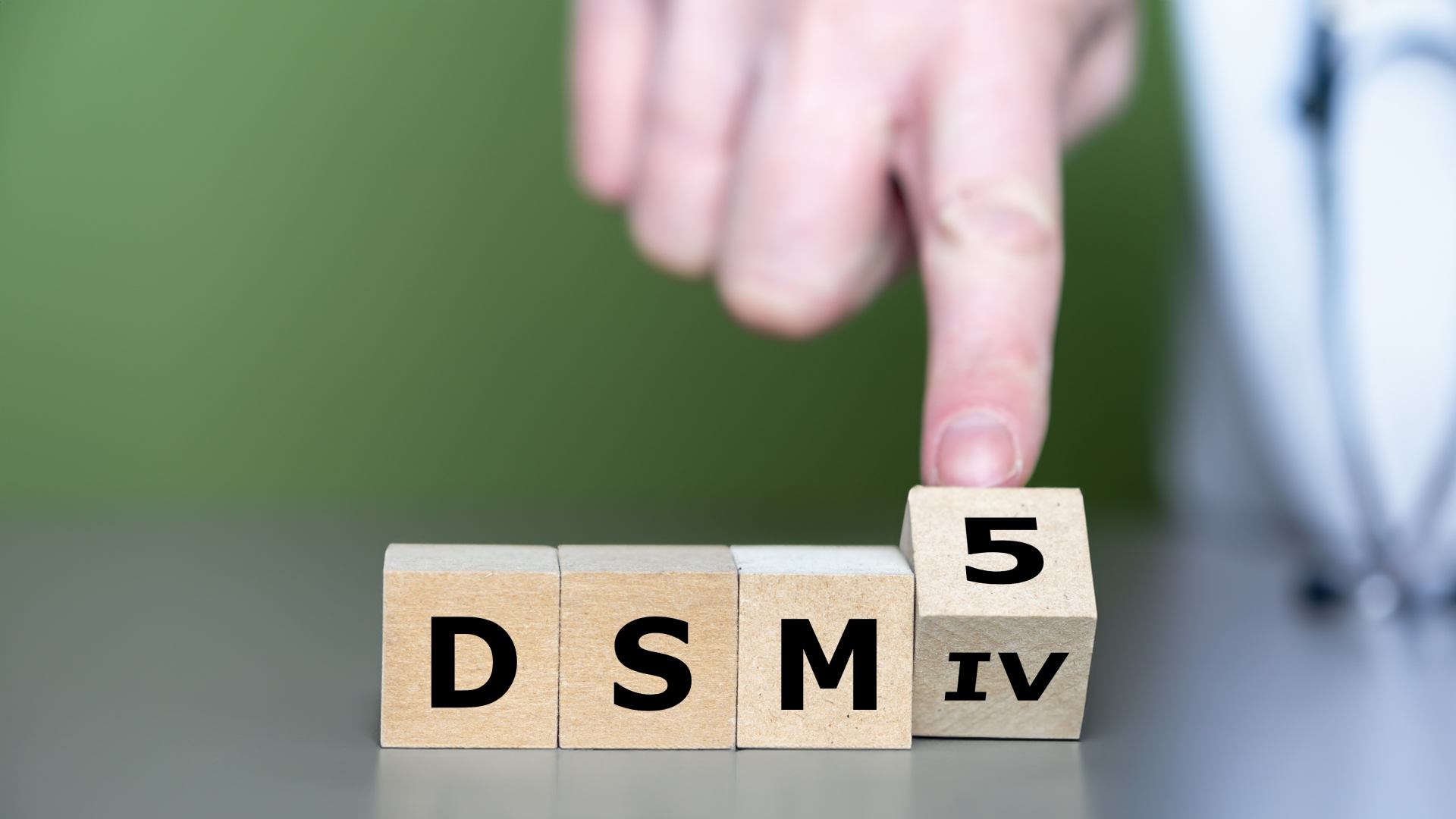
“True narcissistic personality disorder is a clinical diagnosis under the DSM-5-TR — its criteria are substantially the same as the older DSM-IV definition — requiring five of nine specific traits, present consistently from early adulthood. But you don’t need a diagnosis to recognize narcissistic abuse, and you don’t need one to ask a North Carolina family law attorney for help.”
— Darlene Garcia, Associate Attorney, Cape Fear Family Law

Why I’m Writing This (and Why You’re Reading It at 1:00 a.m.)
¿Qué onda, amiga? If you found this blog at midnight while your spouse is asleep — or pretending to be — you are not alone, and you are not crazy. I see clients every week who meet with me over Zoom from Smithfield-adjacent Johnston County and downtown-Raleigh Wake County. While on video I normally see them sitting there clutching a notebook full of incidents, a phone full of screenshots, and a heart full of “am I the problem?”
You are not the problem (or at least I generally hope you are not. You may, however, be married to someone whose brain is wired in a way the Diagnostic and Statistical Manual of Mental Disorders, Fifth Edition, Text Revision (DSM-5-TR) takes very seriously. Let’s untangle it together — calmly, accurately, and with the kind of clarity North Carolina judges actually respond to.
Recently a client called while on her headphones taking a walk on the Buffalo Creek Greenway in Smithfield because her husband “didn’t allow” her to leave the house except to exercise. At first she assumed this was reasonable because he alone works, earns the money, and she should be respectful of his “authority” and the right to use the marital money in any manner he wants. As the call went on, I realized that some gas lighting or brainwashing occurring. Those behaviors and conditions are not my job to fix during an initial consultation (what we can an IC), but just to advise on her legal rights. While in the middle of the cognitive dissonance and overall brain fog she was evidencing, she was clear in her gut and instincts that she was not being treated well and needed to leave her marriage.
What Is Narcissistic Personality Disorder, Really?
Narcissistic Personality Disorder (NPD) is a clinical diagnosis — not a TikTok label, not an insult you throw during an argument, and not something a family law attorney can diagnose (even one who has read more psychological literature than is probably healthy). According to the American Psychiatric Association’s DSM-5-TR, NPD is a pervasive pattern of grandiosity, need for admiration, and lack of empathy that begins by early adulthood and shows up across many contexts.
Three (3) important things here:
- The DSM-5-TR criteria are substantially the same as the older DSM-IV criteria. So if you’ve been Googling “DSM criteria narcissistic personality disorder” and seeing both versions, breathe easy — the answer is essentially the same from our reading.
- A clinician looks for 5 of 9 specific traits, persisting over time and across situations (Cleveland Clinic). Not 5 traits on a bad Tuesday. Five traits, all the time, in many places.
- Do not “diagnose” your partner, spouse, or co-parent. Especially if you are not licensed to do so.
The Nine (9) DSM-5-TR Criteria — Plain English Edition
Below is a plain-English translation of the nine NPD criteria as summarized in DSM-5-TR. I’m paraphrasing intentionally — the APA’s exact language is copyrighted, and you don’t need their words to recognize the pattern.
| # | DSM-5-TR Criterion (Plain English) | What It Looks Like At Home |
|---|---|---|
| 1 | Grandiose sense of self-importance – hint, BIG EGO. | Inflates achievements; expects to be treated as superior with little to back it up. |
| 2 | Preoccupation with fantasies of unlimited success, power, brilliance, beauty, or ideal love | Daydreams of being “discovered,” “owed,” or “destined” — and resents reality for not cooperating. |
| 3 | Belief in being “special” and understandable only by other special or high-status people | Name-drops, status-shops, dismisses anyone “beneath” them — including, often, you. |
| 4 | Need for excessive admiration | Fragile under the bravado; punishes you when applause goes silent. |
| 5 | Sense of entitlement | Expects favorable treatment and automatic compliance — and rages when it doesn’t arrive. |
| 6 | Interpersonally exploitative | Uses people as tools — including spouses, children, in-laws, and the family budget. |
| 7 | Lack of empathy | Cannot — or will not — recognize the feelings or needs of others. |
| 8 | Envy of others, or belief others envy them | Threatened by your wins; convinced everyone secretly wants their life. |
| 9 | Arrogant, haughty behaviors or attitudes | Condescension as a love language. Eye-rolls as foreplay for an argument. |
Threshold: A clinician will diagnose NPD when at least 5 of those 9 are present, persistent, and impairing — see the Duke Health “SPECIAL ME” overview and the NIH StatPearls summary for clinical detail.
Hidden Signs You Might Be Missing
Most spouses don’t walk in saying “my husband meets criterion 3 and criterion 7.” They walk in saying, “something is very wrong, but he looks great on Instagram and everyone at church loves him.” That gap — the public charm versus the private reality — is often the loudest signal. When it is your family, friends, and even children who love the spouse with NPD, it can be truly disheartening.
Pattern 1: The “Public Saint, Private Tyrant” Split
Narcissistic traits often include image management at an Olympic level. The neighbors see a doting parent. You see someone who hasn’t asked how you are in three years and has not engaged in homework review once since your children commenced attending school. This is consistent with the need-for-admiration and grandiosity criteria.
Pattern 2: Devaluation Cycles
Idealize → devalue → discard → hoover back in. If your marriage feels like a Netflix limited series with a cliffhanger every Sunday night, that pattern can reflect the exploitation and lack-of-empathy criteria operating in real time.
Pattern 3: Pornography Use as a Novelty/Admiration Symptom
Let’s be careful here. Janet L. Gemmell, Board Certified Family Law Specialist and law firm founder notes, “porn use and/or porn addiction does not equal narcissism. Plenty of adults use pornography and never come within a zip code of NPD. So even though your spouse compares you negatively or harshly to porn stars and is further derogatory to you in word and deed, that is not sufficient to meet the criteria (though it probably should be).”
Pero — clinicians have long observed that compulsive pornography use, especially when paired with secrecy, escalation, and devaluation of a real-life partner, can map onto several NPD traits: the hunt for novelty, the demand for admiration without intimacy, and the lack of empathy for a partner’s distress when he or she discovers it. (Yes, you read that right. Women can also have a porn addiction, although sometimes it comes more in the form of romance novels) The keyword is can, not always. Be cautious of anyone — including the internet — who tells you otherwise.
Porn is free, rampant on the internet, and often depicts brutalization, demoralization, or themes that are distasteful to others in some manner. Nevertheless, when someone is married and the porn is not utilized in the sanctity or in agreement with your spouse, that is normally where we see shame, secrecy, and gaslighting interact. There is real treatment for porn addiction, and it is not only turning off the computer – I mean come on, the same people do have phones, right?
Pattern 4: Financial Coercion Dressed Up as “Leadership”
Controlling the budget, hiding accounts, weaponizing community property — all of this can sit inside the entitlement and exploitation criteria. In North Carolina equitable distribution cases, this pattern is also legally relevant. More on that below.
A Slightly Different Take (Because Marriage Is Rarely Tidy)
I want to be honest about something. I sit in consult rooms with people — usually women, sometimes men — who are genuinely living with a spouse whose behavior fits this pattern. My job is to advocate for them fiercely. My founder, however, reminds me regularly that the courtroom does not assume the person on my side of the table is the healthy one. She likes to keep me sharp and on my toes.
“Look, sometimes I meet the so-called ‘narcissist’ — and he’s the one who’s been working two jobs, paying every bill, and quietly raising the kids while his spouse spends six hours a day on a wellness journey involving essential oils, daily microdosing of some substance, and a podcast addiction. The label gets tossed around like carne asada at a cookout. My job is to figure out which spouse the evidence actually supports — not which one diagnosed the other first on Reddit.”
— Janet L. Gemmell, Board-Certified Family Law Specialist & Founder, Cape Fear Family Law
Janet’s right (she always reminds me she’s right). Wait a minute … is that a trait? Joking! North Carolina judges have seen every flavor of this story, and the spouse who shows up best-organized, most-credible, and least-dramatic tends to do better — regardless of who is technically the narcissist. Eso es la verdad.

What North Carolina Courts Actually Do With Narcissistic Traits
Here is where the legal rubber meets the road. NC judges do not issue rulings that say “Husband is a narcissist; wife wins.” What they do is apply established standards where personality disorder traits can become evidence.
The “Best Interest of the Child” Standard (Custody)
In NC custody cases, the court must determine what serves the child’s best interest — and the mental and physical health of each parent is an explicit factor (CTK Law overview; NC Bar Association: Child Custody and Visitation). The NC Bar’s guidance specifically warns that joint physical custody is not advisable where a parent suffers from a debilitating mental illness or where the parents cannot cooperate — both of which can be implicated in NPD dynamics.
Rule 35 Mental Examinations
Under N.C. Gen. Stat. § 1A-1, Rule 35, when a party’s mental condition is genuinely “in controversy,” a judge may — on motion and for good cause shown — order a psychological examination. This is not a fishing expedition tool. It is a high-bar, surgical request, and it must be pursued strategically.
Equitable Distribution
If one spouse’s narcissistic traits have driven financial misconduct — dissipation of marital assets, hidden accounts, retaliatory spending — those facts can affect an equitable distribution award under N.C. Gen. Stat. § 50-20.
Alienation of Affection and Criminal Conversation
North Carolina is one of the few states that still recognizes these “heart-balm” torts. Where a third party has interfered with a marriage — common in cases involving the novelty-seeking and exploitation patterns above — there may be a separate civil claim (Smith Debnam analysis; Woodruff Family Law).
Treatment Realities (Spoiler: It’s Hard)
If you are quietly hoping your spouse will read a book and become a different person — mija, I love you, and I have to be honest with you. Personality disorders are among the hardest mental health conditions to treat. NPD in particular has low treatment-seeking rates because the very nature of the disorder makes the person believe they are not the one who needs help (NIH StatPearls; Society for the Advancement of Psychotherapy).
Real change requires:
- A clinician experienced in personality disorders (not a general counselor);
- Long-term therapy — measured in years, not sessions;
- The patient’s genuine, sustained acknowledgment that they are the problem.
The first two are available. The third is the one that almost never arrives.
How Children Learn What They Live
This is the part of the consult where my voice gets quieter. Children of a narcissistic parent often grow up modeling either the trait (becoming entitled, image-conscious, exploitative) or its mirror (becoming chronic appeasers, perfectionists, or “parentified” caretakers). North Carolina judges know this, which is why the “best interest” standard looks not just at safety, but at which environment will shape this child into a healthy adult.
If you take nothing else from this blog: the courtroom record you build now is also the emotional record your kids will inherit. Document calmly. Lawyer up early. Stop arguing with the wall.
Where We Meet Clients — Johnston & Wake County
Many of our Latino and English-speaking clients call in from Clayton, Smithfield, Selma, Benson, and Four Oaks in Johnston County, and from Raleigh, Garner, Cary, and Apex in Wake County. If you need a quiet place to think before our consultation, walk the Buffalo Creek Greenway in Smithfield — it’s a beautiful stretch where I’ve literally taken phone calls from clients who needed a calm voice on a hard day. In Wake County, the benches at Pullen Park in Raleigh have heard more “I think I’m finally ready” decisions over a Zoom or Google Meet than they will ever admit.
We meet clients across North Carolina, and we travel — but if Johnston or Wake County is home, estamos aquí para ti. I am specifically there for you.
FAQ: Narcissistic Spouses in North Carolina
Is my spouse a narcissist? How do I know for sure?
You don’t — and you don’t have to. Only a licensed clinician can diagnose NPD using the DSM-5-TR’s 5-of-9 criteria. What you can know is whether the pattern is hurting you and your children. That alone is enough to call a North Carolina family law attorney.
What are the DSM-5-TR criteria for narcissistic personality disorder?
NPD is defined by a pervasive pattern of grandiosity, need for admiration, and lack of empathy, with at least 5 of 9 specific traits present persistently from early adulthood: grandiosity, fantasy preoccupation, belief in being special, need for admiration, entitlement, exploitation, lack of empathy, envy, and arrogance.
Are the DSM-IV and DSM-5-TR criteria for NPD the same?
Substantially yes. The criteria carried over with only minor revisions, which is why older articles and newer ones largely agree on the 9-trait, 5-threshold framework.
Is my husband a narcissist if he uses pornography?
Pornography use, by itself, does not indicate narcissism. Compulsive use combined with secrecy, escalation, and devaluation of a partner can align with several NPD traits (novelty-seeking, admiration need, lack of empathy). It is one possible signal — not a diagnosis.
Will North Carolina courts label my spouse a narcissist?
No. NC judges apply legal standards — best interest of the child, equitable distribution factors, domestic violence statutes — and consider mental health evidence within those frameworks. A judge will not “diagnose” anyone from the bench.
Can I force my spouse to get a psychological evaluation in an NC custody case?
Sometimes. Under N.C. Gen. Stat. § 1A-1, Rule 35, a judge may order a mental examination when a party’s mental condition is genuinely in controversy and good cause is shown. This is a strategic motion — not a routine one.
Does narcissism affect alimony or equitable distribution in NC?
Narcissism is not itself a statutory factor, but the behaviors often associated with it — financial misconduct, dissipation of marital assets, marital fault — can directly affect alimony and ED outcomes under N.C. Gen. Stat. §§ 50-16.3A and 50-20.
Can I sue the person my narcissistic spouse cheated with?
Possibly. North Carolina still recognizes the torts of alienation of affection and criminal conversation, which allow a spouse to sue a third party who interfered with the marriage.
Can a narcissist change?
Genuine change is rare and slow. NPD is among the hardest personality disorders to treat, and effective therapy requires a clinician experienced with personality disorders and a patient who truly believes they need to change.
Should I confront my spouse with this blog?
Por favor, no. Confrontation often triggers retaliation, document destruction, or a custody arms race. Talk to a North Carolina family law attorney first. Build the record. Then decide.
Ready to Talk?
If this blog made your stomach drop because it described your kitchen, your bedroom, or your last argument — call us. We will meet you with discretion, fluency in English and Spanish, and a plan that protects your kids, your finances, and your peace.
Cape Fear Family Law | Serving Johnston County, Wake County, and all of North Carolina Schedule a confidential consultation today.