
“April 15th is a critical deadline that can carry significant financial ramifications in a North Carolina divorce. With the Iran conflict triggering rapid-fire deployments at Camp Lejeune and Fort Liberty, your tax filing status isn’t just about a refund, it’s about preserving your SCRA protections and defining your income for the purposes of determining support payments. Making the wrong move now, without considering deployment clauses or military-specific tax treatment, is a recipe for a legal ambush in the future.”
–Granger Kimmel Benson, Associate Attorney, Cape Fear Family Law (Jacksonville, NC), April 8, 2026
April 15 Is Coming: The 2026 Tax Filing Decisions That Can Destroy Your Divorce Case

As a former Marine Corps Major,, I’ve seen how quickly “orders” can change the landscape of a family. Whether you are the service-member who is deploying, or the spouse staying behind, the decisions you make on your tax returns this week will echo through your equitable distribution, alimony, and custody cases, possibly for years.
When a certain Staff Sergeant Daniel Ruiz (*name changed for confidentiality*), a Marine with a spotless service record, and a deployment schedule that ruled every corner of his life, found himself pulled into a civil custody battle back home, he trusted an attorney who knew family court but not the hard geometry of active duty orders, command obligations, and sudden deployment changes. Ruiz failed to file his taxes before he ended up getting deployed. As a result, deadlines passed while he was away, and the narrative quietly turned against him – painting duty as absence and sacrifice as indifference. By the time Ruiz returned, the damage was done, and his legal mission had been compromised not by lack of commitment, but by lack of an advocate who understood where military life and family court collide. He hired counsel after the loss, and for the first time felt someone could translate both of his real battlefields: one in which he wore a uniform daily, and the other, the courtroom, where his financial future, and his relationship with his children, would be largely decided.
Should Divorcing Spouses File Taxes Jointly in NC?
One of the most common questions I get in Onslow, Pender and Carteret counties this time of year is: “Granger, should I still file jointly with my spouse if we are separated? How can you make my spouse file with me?”
In North Carolina, the answers to each depend entirely on (a) your Date of Separation (DOS) (b) your level of trust, and (c) whether you are participating in litigation or negotiating outside of the Court system.
- The Financial Advantage vs. The Legal Risk
Filing Married Filing Jointly (MFJ) almost always results in a lower total tax bill than Married Filing Separate (MFS). However, when you sign a joint return, you are “jointly and severally liable.” This means if your spouse “fudged” the numbers or failed to report income from a side hustle, the IRS can come after you for the full amount, regardless of what your divorce decree says. While you may be able to agree on an indemnification agreement, that is not binding on the IRS nor your state’s department of revenue.
- The Impact on Support Calculations
If you are seeking alimony or child support, your tax return is “Exhibit A.” Filing jointly can sometimes mask your individual financial reality. If we are trying to prove your need for support in the courtroom, we need a clear picture of your specific tax liability for the judges there.
Comparison: Joint vs. Separate Filing in an NC Divorce
| Feature | Married Filing Jointly (MFJ) | Married Filing Separate (MFS) |
|---|---|---|
| Tax Rate | Generally Lower | Generally Higher |
| Liability | Joint & Several (Both Responsible) | Individual Responsibility |
| Evidentiary Reliability | High. Verified by both parties as proof of income so trusted by Court | Lesser. Signals a tactical dispute; one spouse may believe there are “intel gaps” or lies about actual income earned |
| Refund Control | Shared; requires an agreement on split. | You keep your own refund. |
| Alimony Impact | Can complicate income “snapshots.” | Provides a cleaner break for support math. |
| Military BAH | Can complicate income “snapshots.” | May be necessary to show individual need. |
Who Claims Children on Taxes During Divorce in NC?
The question of “who gets the kids” on the tax return is a frequent point of confrontation if MFS or even after the divorce. Under North Carolina law, the custodial parent (the one with whom the child lives for the greater part of the year) is technically the one entitled to claim the child under IRS rules.
However, we often negotiate this as part of the overall “mission.” Along with drafting the terms into your consent order or agreement, we can use IRS Form 8332 to allow a non-custodial parent to claim the child. This alone can be a valuable bargaining chip in equitable distribution or alimony negotiations.
One of the smartest ways to use the child tax credit in mediation or collaborative sessions is as a tactical concession, a peace offering that helps move the mission forward without wasting time and resources. With all the changes in the One Big Beautiful Bill, giving ground on that one issue can save a client thousands in legal fees and help secure tens of thousands more in assets now instead of rolling the dice in front of a judge.
The Iran Conflict: Military Deployments and the SCRA

How the SCRA Protects You
The SCRA is designed to ensure that military members can focus on their mission without worrying about legal ambushes back home.
- Stay of Proceedings: If deployment prevents you from participating in your divorce or tax-related hearings, the court must grant a stay of at least 90 days. Our judges in North Carolina generally grant full protection, other than for emergency issues, for the entire duration of the deployment. Each case is unique though and that’s why you need an attorney on deck to be the guardian and watchtower.
- No Default Judgments: A spouse cannot “win by default” just because you are in a forward-deployed location. This is SCRA protection at its best.
Emergency Custody and Deployment Clauses
If your co-parent is being deployed to the Iran theater of operations right now, and your current order doesn’t have a Deployment Clause, you are in a state of legal vulnerability and limbo.
What a “Mission-Ready” Custody Order Includes:
- Designated Caretakers: Who gets custody while the parent is away? Does it automatically go to the other parent, or is there a step-parent involved?
- Extended Family Visitation: NC law allows for “electronic visitation” (FaceTime/Signal) and can even grant visitation rights to grandparents while a parent is deployed.
- Custody Reversion: The order should explicitly state that custody reverts to the original schedule within a specific timeframe (e.g., 30 days) of the parent’s return. This is the gold standard and necessary in all consent orders with a military member as a party.
- Emergency Modifications: If the orders came down yesterday and you have no plan, we may need to seek emergency relief from the court to protect the child’s stability.
Unique NC Military Family Issues in 2026
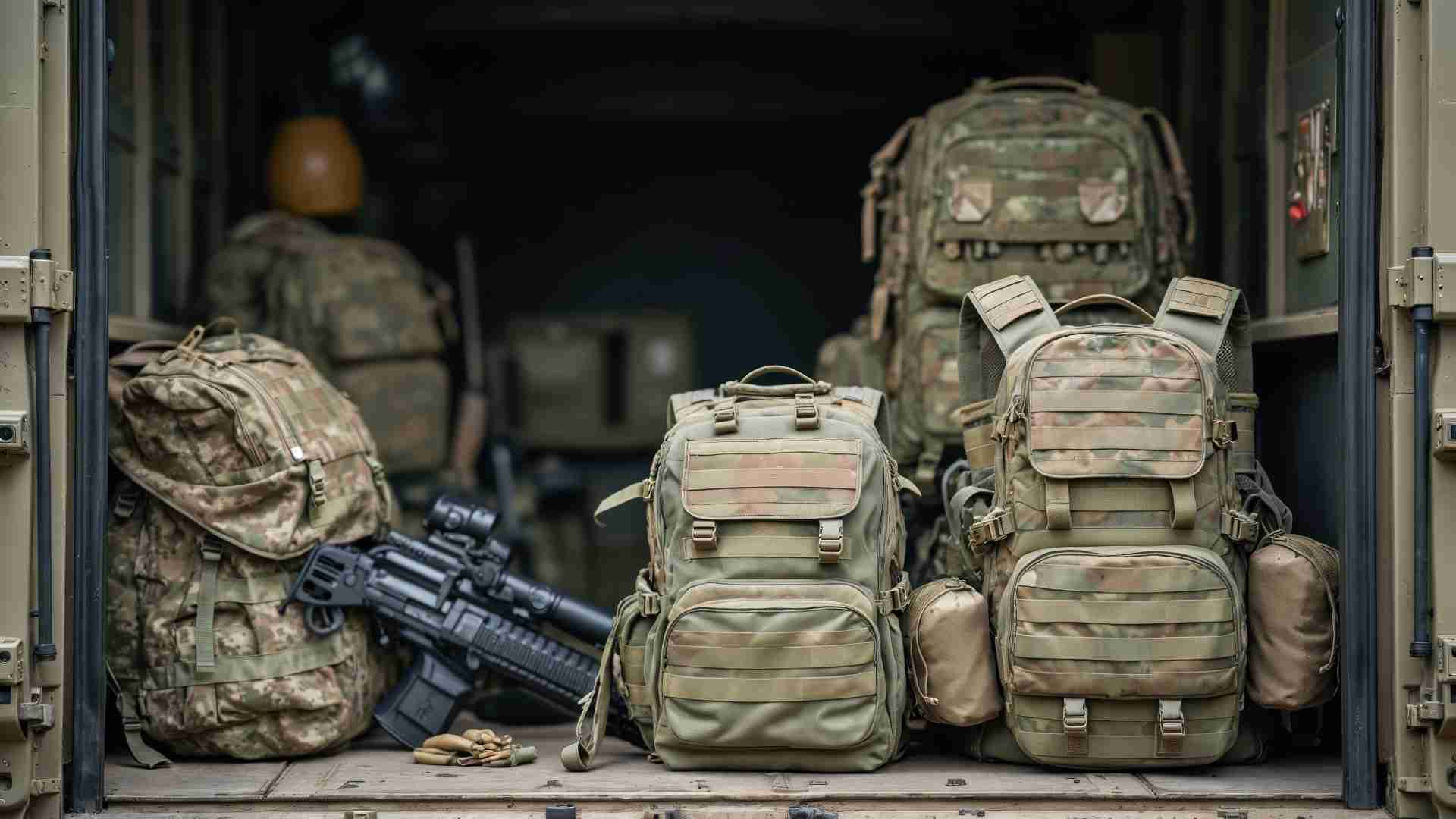
Military divorce isn’t like civilian divorce. It requires a skilled practitioner who knows the “rank and file” of the law. It requires someone that does not dabble in military issues, but touches them daily.
BAH and Support Calculations
In North Carolina, Basic Allowance for Housing (BAH) is considered income for the purposes of calculating child support and alimony, even though it isn’t taxed by the IRS. If your spouse is a Major at Lejeune, their “take-home” pay on a tax return doesn’t tell the whole story. We know how to add those non-taxable allowances back into the equation to ensure a fair result. We can often help you do this without your calls to their command, which are generally more hostile and negative to your own case in Court than you can imagine.
USFSPA and Retirement
The Uniformed Services Former Spouses’ Protection Act (USFSPA) governs how military retired pay is treated in a divorce. This is a complex area where a “rookie” attorney can cost you a huge hit to your future retirement that you sacrifice for while deployed. We ensure the “disposable retired pay” is calculated correctly and that the 10/10 rule is considered for direct payment from DFAS.
Janet L. Gemmell, the CEO, Founder, and Board Certified Family Law Specialist here at Cape Fear Family Law truly advocates for military members and has pushed her philosophy down our chain of command. She taught us her theories when she said; “my “Mission Accomplished” philosophy for representing clients in the military is simple and I tell them: you stay focused on your career, your kids, and your deployment, while I carry the legal ruck, manage the chaos, and move your case forward with a clear SOP and steady strategy.”
Although I no longer put on the uniform each morning, my time in the military still resonates with me on a daily basis. I agree with Janet L. Gemmell’s mission, and in family law, it’s my job is to handle the heavy lifting for your case so you don’t have to spend your evenings and weekends trying to navigate the complexities of the civilian court system on your own, and can instead spend your time focused on your job and your family.
FAQs: Tax, Divorce, and Deployment
What if my spouse refuses to sign a joint tax return?
Without Court intervention, you cannot force a spouse to file jointly in North Carolina. States are divided on whether or not this can be forced at all. Many Courts will instead “backdoor” the issue by incentivizing the joint filing. If your spouse refuses, you must file as Married Filing Separately. This often increases the tax burden for both, which is why we try to resolve this through mediation first. However, the Court still retains the power in Equitable Distribution to distribute this tax debt between the parties even after the IRS and Department of Revenue tell you how much to pay.
Can I get a tax extension if I am deployed to the Iran conflict?
Yes. Servicemembers in a combat zone generally get an automatic extension to file their taxes. However, this does not necessarily stay your North Carolina divorce deadlines unless we formally invoke the SCRA.
Does “Electronic Visitation” count as real visitation in NC?
Absolutely. We understand that a physical hug can never be replaced by a video call. Nevertheless, North Carolina courts recognize that for a deployed parent, a FaceTime call or a Signal message is a vital link. We write these protocols into orders to ensure you don’t lose that bond while serving.
How does the Feb 28 Iran conflict impact my alimony and assets?
If the conflict has led to increased deployments, it may change the “income” picture for both spouses (e.g., combat pay, imminent danger pay). This might require a temporary or permanent modification of support orders. Here’s another real issue to consider, once deployed how do we secure savings and joint accounts from depletion. Nothing is worse than coming home from risking your life to finding out all the pay you earned was spent by your spouse during your legal separation. We can help with this immediately.
Take Action: Don’t Let the Deadline Destroy Your Case
The topics of taxes and war-time deployment are heavy, but they cannot be ignored. Whether you are in Onslow, Cumberland, Jones, Sampson, Duplin, or Carteret county, you need an advocate who understands both the courtroom and the barracks.
I bring positivity and energy to every case because I believe we can find a resolution that helps rather than hurts. But make no mistake—if a fight is what’s needed to protect your “mission,” I have the skills to be the tough guy in your corner. I believe and hope that the other members of our legal team here at Cape Fear Family Law are also part of a band of brothers and sisters in the law who want to help you and are trained and ready to bring the fight home to you.
Ready to protect your future?
Download our ‘Military Divorce Deployment Checklist‘ to see the 10 tactical moves to secure your perimeter before you ship out.
Schedule a Confidential Consultation with Attorney Granger Kimmel Benson Today
Schedule a Confidential Consultation Today
Additional Resources On Our YouTube Channel:
- YouTube Video: Military Divorce in North Carolina
- YouTube Video: Dad’s $15,000 Mistake: How a Child Support Battle Backfired in Court