
Direct Answer
If you and your co-parent are on good terms, two homes can make Halloween better. Two houses can mean two chances at a great celebration instead of one night chopped awkwardly in half. Pick the traditions your child genuinely loves, let each home create its own version, and settle the costume and photo logistics before Halloween night arrives.
–Janet L. Gemmell, Divorce Attorney Extraordinaire

Do We Have to Split Halloween Night?
No. In fact, if you get along well enough to plan together, I would seriously consider splitting the Halloween season instead of splitting Halloween night.
Halloween has quietly become much bigger than October 31.
Between school celebrations, trunk-or-treats, neighborhood parties, pumpkin patches, costume events, church gatherings, fall festivals, and the main event itself, many children have several different opportunities to celebrate throughout the second half of October.
That gives cooperative co-parents an opportunity.
Instead of turning Halloween night into a custody relay race:
Give each house a different part of the season and let each parent have a complete experience with the child.
Your child may not experience that as a divided holiday at all.
They may experience it as the discovery that divorce has somehow resulted in additional Halloween.
For a seven-year-old, this is not a minor development.
This is excellent news.
The goal is not to make every holiday perfectly equal down to the minute. The goal is to create traditions your child can count on in both homes.
And when parents are able to work together, Halloween is one of the easiest holidays to get creative with.
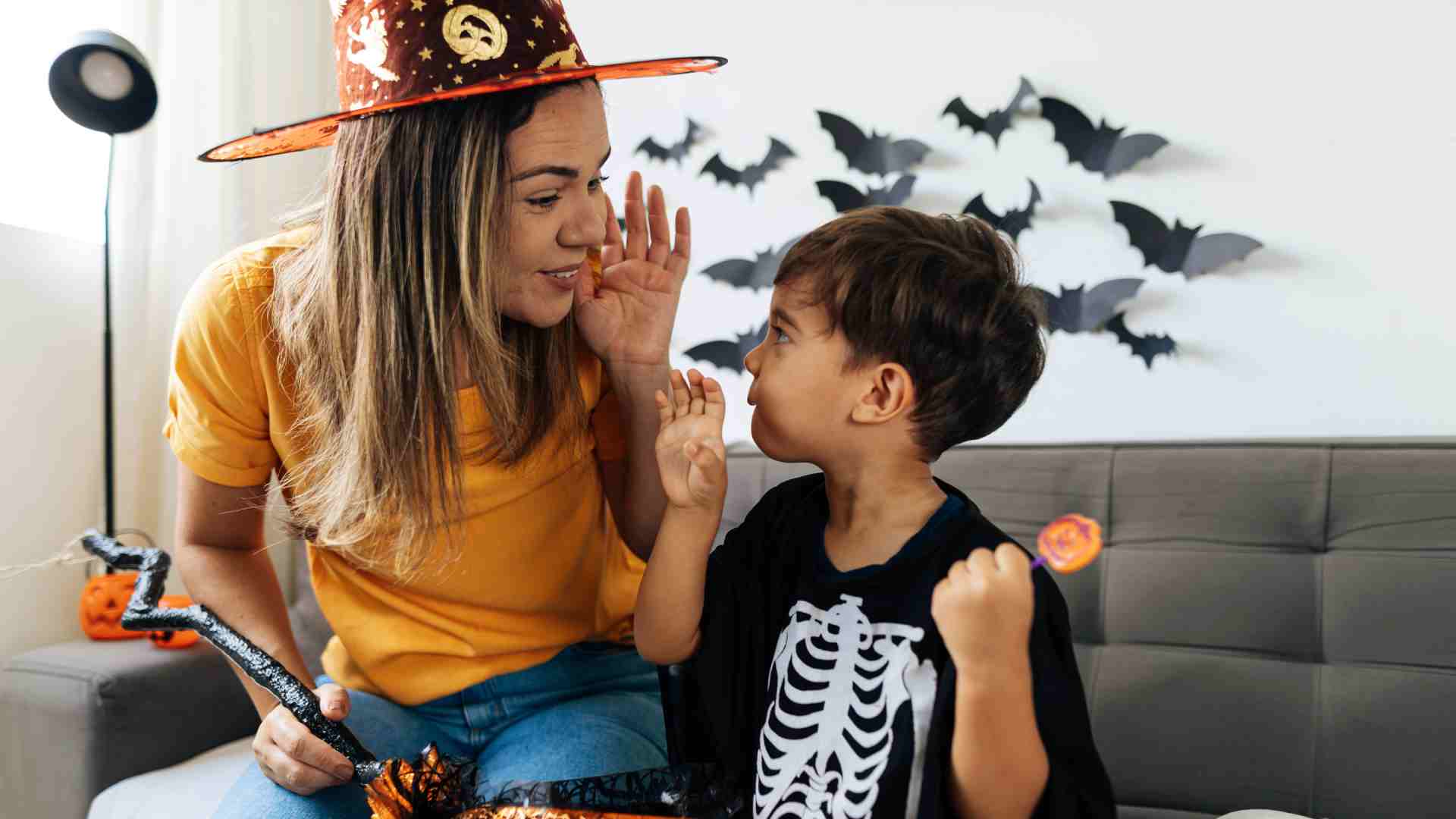
What Are Parents Doing Instead of Traditional Trick-or-Treating?
Almost everything.
Traditional door-to-door trick-or-treating is still fun, but it is hardly the only option anymore. Families are creating smaller, more controlled, and sometimes much more memorable Halloween traditions.
That is especially useful for children moving between two households.
One parent does not have to duplicate exactly what happens at the other parent’s house. In fact, I think it can be better when you don’t.
Let each home develop its own personality.
Here are a few possibilities:
| THE IDEA | WHY KIDS LOVE IT | WORKS BEST WHEN… |
|---|---|---|
| Trunk-or-treat | Lots of costumes and candy without miles of walking | You want a big, social event with familiar adults nearby |
| Candy scavenger hunt at home | Clues, a map, and treasure at the end | The weather is bad or your child prefers to move at their own pace |
| Costume runway show | They get to perform, pose, and improvise | You want an inexpensive tradition you can repeat every year |
| Sensory Halloween night | Slime, mystery boxes, crafts, snacks, and hands-on fun | Your child is young or happier with a quieter celebration |
| Nursing home or community visit in costume | They get attention, smiles, and usually a fair amount of candy | You want part of the holiday to involve giving and connecting with others |
| Boo basket | It feels like opening a Halloween present | One home wants its own signature tradition |
Here is the idea I particularly like:
Each house picks something and owns it.
Not competitively.
Not, “Dad got the better event last year, so Mom gets the premium Halloween package this year.”
Just a genuine division of traditions.
Maybe one household becomes the scavenger-hunt house every October.
The other always does the big trunk-or-treat.
Grandma always hosts pumpkin carving.
The other side of the family always makes ridiculous Halloween desserts that bear only a passing resemblance to the Pinterest photograph.
That’s okay.
Traditions become traditions because we repeat them.
Give your child a few things that happen reliably in each home, and after a couple of years, those events begin to feel like their Halloween rather than Mom’s Halloween and Dad’s Halloween.
Here’s my best ultimate 2026 Halloween tip
Trunk-or-Treats are in! Multiple trunk-or-treat options exist almost every day during the week leading up to Halloween – so even limited visitation schedules have options. Since you spend most of the time standing in line or running around outside in the autumn with your child in warm clothing, an expensive costume may be a total waste of funds. Start with a cheap sweatsuit from Walmart, Temu, or even Target. Now add in inexpensive costume items. Use $20.00 (or less) at the dollar store and a roll of duct or Gorilla tape. You let your child run wild in the dollar store and create an alien out of anything they buy for up to $20.00 taped to the inexpensive track suit. When done, untape and wash and you now have an autumn outside play outfit they can get dirty or destroy.
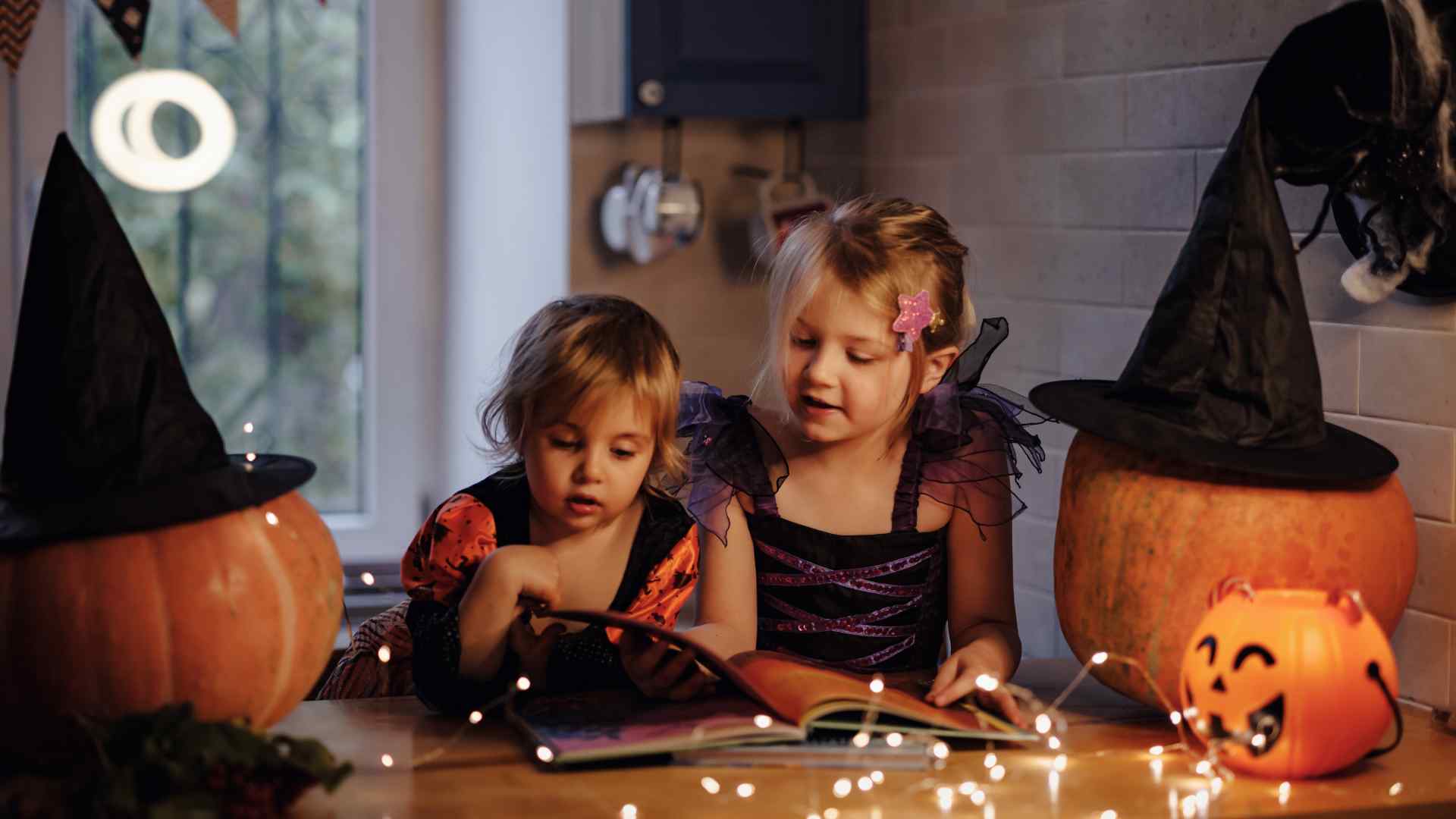
Can Our Child Celebrate Halloween Twice?
Of course.
There is no rule requiring divorced parents to pretend Halloween exists for only six hours.
If your parenting arrangement permits it and both parents are cooperative, a child might attend one event with one parent on Saturday and another with the other parent on Sunday.
They might trick-or-treat with one household and attend a school or community Halloween event with the other.
They might even wear the same costume twice.
Children are rarely offended by getting a second opportunity to dress up as Spider-Man.
The adults are usually the people making this more complicated than it needs to be.
The more useful questions are practical:
- Who is buying the costume?
- Does the costume travel between houses?
- Who is responsible for washing or repairing it between events?
- Are there accessories that are easy to lose?
- Does your child want the same costume for both celebrations?
- Are there school rules about masks, props, makeup, or pretend weapons?
- When does the costume need to move from one house to the other?
The twenty-minute conversation you have now can prevent the October 31 message that begins:
“Do you have the cape?”
Nothing good has ever followed that sentence at 5:42 p.m.
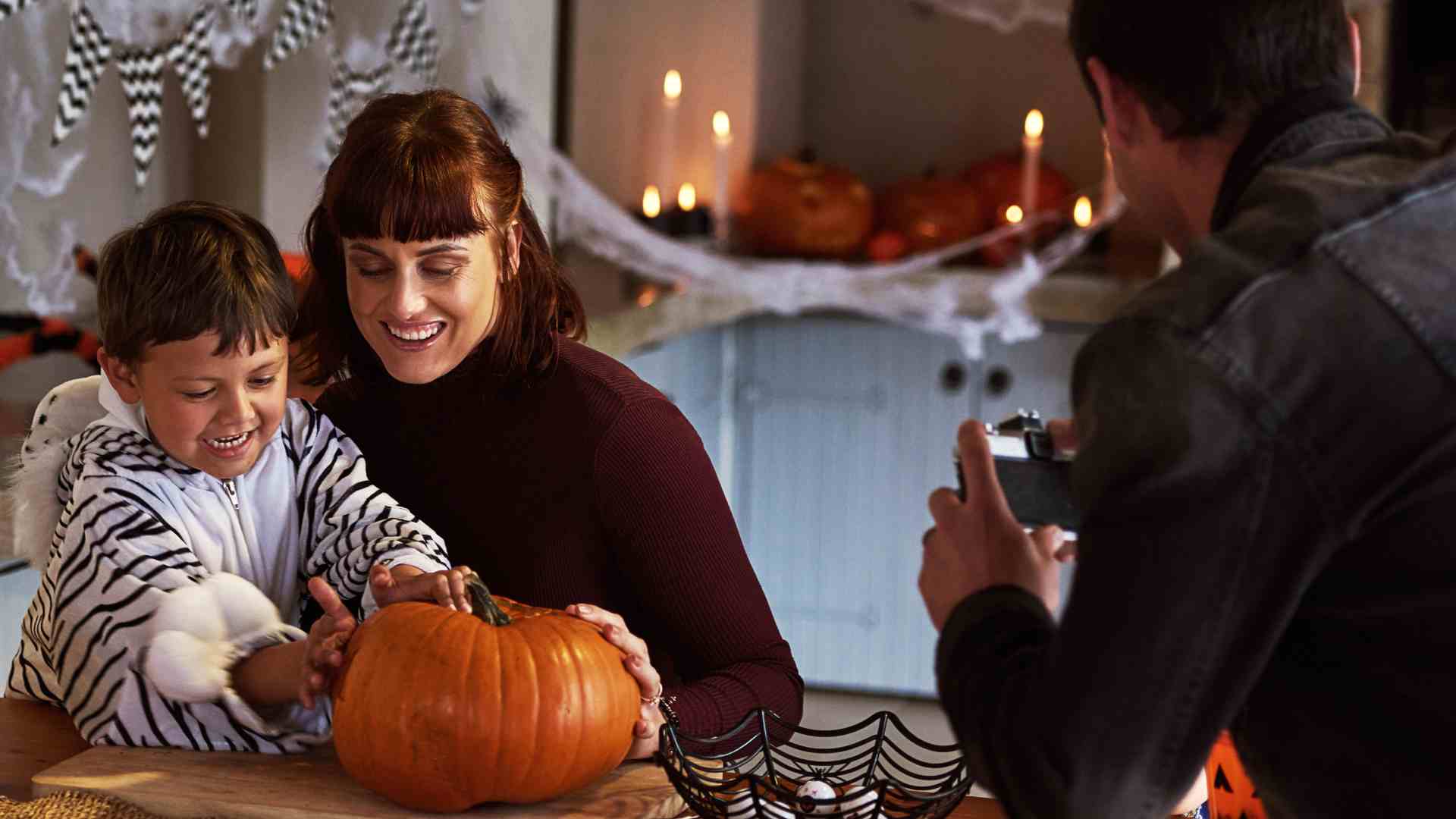
How Should Co-Parents Handle Halloween Photos?
Decide three things before anyone is standing outside in the dark holding a phone while a child announces that the wig is itchy.
- Decide who takes the good costume portrait.
- Take one picture in daylight.
- Do it before trick-or-treating.
- Before the chocolate.
- Before the face paint migrates.
- Before somebody’s inflatable dinosaur costume develops a structural problem.
- Whoever has the child that afternoon can take the main portrait and send it to the other parent.
- Agree to share photos without being asked.
- If one parent has the child for the main Halloween event, send the other parent a few pictures that evening.
- No elaborate report required.
- No emotional negotiations.
- Just the photographs.
- That tiny gesture says:
- “You weren’t here, but you still get to see this.”
- For cooperative co-parents, small habits like that can preserve an enormous amount of goodwill.
- More importantly, your child does not grow up feeling that happy moments have to belong exclusively to one side of the family.
- Decide your social-media rules.
Parents should know where they stand on:
- Whether the child’s photographs may be posted publicly
- Whether the child’s face appears
- Whether a school or neighborhood is identified
- Whether locations are tagged in real time
- Whether extended family members may post photographs
- Whether both parents need to approve certain photographs first
This is bigger than Halloween.
If you can reach a standing agreement about posting photographs of your child, write it down and use it year-round.
And if your relationship genuinely allows it, consider taking one photograph with both parents and the child.
You do not have to spend Halloween together.
You do not have to become best friends.
You do not need matching pumpkin sweaters.
But if you can comfortably stand together for thirty seconds and give your child a photograph with both parents smiling beside them, that picture may matter years from now.
Long after the candy is gone.
Should We Spend Halloween Together After Divorce?
Maybe.
But please do not confuse successful co-parenting with performing togetherness.
Some separated parents genuinely enjoy taking their child trick-or-treating together. If everybody is comfortable, expectations are clear, and nobody is secretly treating the evening as a relationship audition, it can be wonderful.
Other parents get along beautifully precisely because they maintain healthy boundaries.
That is also successful co-parenting.
You are not required to recreate an intact-family Halloween to prove that you are cooperative parents.
Your child can have:
- Halloween with Mom;
- Halloween with Dad;
- separate extended-family traditions;
- two different neighborhoods;
- different activities in each home; and
- parents who communicate respectfully about all of it.
That is not a broken holiday.
That is simply the version belonging to your family.

What If Grandparents and Extended Family Want Halloween Time Too?
This is another reason to stop treating October 31 as the only available square on the calendar.
If both families have grandparents, cousins, stepparents, aunts, uncles, or close family friends who want to participate, spread the celebrations out.
Maybe the grandparents host pumpkin carving the weekend before Halloween.
Maybe cousins attend the trunk-or-treat.
Maybe another household hosts a Halloween movie night.
Do not make your child spend Halloween changing costumes in the back seat while adults run them from appearance to appearance because everybody “needs their turn.”
Children do not need to complete a Halloween press tour.
Pick the people and traditions that actually matter.
Then protect enough unstructured time for your child to simply enjoy them.
How Do We Plan Halloween Without a Forty-Message Text Thread?
Have one structured conversation.
That is the trick.
Good co-parenting does not necessarily mean communicating constantly. Often, it means communicating clearly and intentionally once so you don’t have to keep renegotiating the same issue.
Halloween planning can become strangely complicated when parents try to solve it through scattered texts:
“What time?”
“Which costume?”
“Your mom coming?”
“Didn’t we say 6?”
“No, you said 6:30.”
“That was about the school thing.”
And suddenly two otherwise rational adults have produced 47 messages about a plastic vampire cape.
Use a framework instead.
That is why we created Let’s Make Halloween Amazing, a free guided brainstorm designed for two parents and two homes.
It walks you through:
- What your child actually wants to do;
- A brainstorming round where both parents contribute ideas;
- Which traditions belong at which home;
- Costume purchasing and transportation;
- How grandparents and extended family fit in;
- Your Halloween photo plan;
- Important times and exchanges; and
- A simple night-of plan both parents can keep handy.
The goal is not to turn Halloween into a corporate strategic-planning retreat.
It is to spend twenty minutes now so you can stop discussing it later.
One parent can start the worksheet and the other can complete it.
What Does Halloween Have to Do With a North Carolina Parenting Plan?
More than you might think.
A parenting plan cannot realistically address every pumpkin patch, costume parade, birthday party, snow day, school performance, family reunion, and mildly chaotic event your child will encounter before turning eighteen.
What a good parenting plan can do is establish a structure that helps parents make those decisions.
When parents are able to cooperate, the strongest parenting arrangements often create both predictability and enough flexibility for real life.
You may want your parenting agreement or custody order to address issues such as:
- Holiday schedules;
- Exchange times and locations;
- Transportation responsibilities;
- Access to school and activity information;
- Travel;
- Communication between parents;
- Communication with the child;
- Decision-making authority;
- Notice for special events; and
- How parents handle agreed schedule changes.
The goal is not necessarily to put Halloween under its own seventeen-paragraph heading.
The goal is to have enough clarity in your larger parenting arrangement that a Halloween conversation does not become a legal emergency.
When something is working well between co-parents, pay attention to why it works.
Those successful patterns can help you build a parenting plan that reflects your actual family instead of creating rules for a theoretical one.
Frequently Asked Questions
Can our child wear the same Halloween costume to two different events?
Yes. Most children are perfectly happy to wear a favorite costume more than once. If your child wants two costumes and the budget allows it, that works too. Decide who is purchasing each costume, where it will stay, and how it will travel between homes before the first event.
How early should co-parents plan Halloween?
About a week to ten days before the main Halloween events is usually a comfortable window for families who already communicate well. That is early enough to resolve transportation, costumes, family events, and exchange times without turning the holiday into a month-long negotiation.
What if one parent wants a huge Halloween and the other wants something quiet?
That can be an advantage rather than a problem. One household can offer the big social event while the other develops a quieter tradition. Children do not need identical experiences in both homes for both experiences to be valuable.
Do divorced parents need to divide Halloween equally?
Not necessarily. Your custody order or parenting agreement controls when it assigns specific Halloween parenting time. Otherwise, cooperative parents may be able to create a plan that focuses less on dividing individual hours and more on giving the child meaningful Halloween experiences with both families.
Can we switch Halloween parenting time without changing our custody order?
Parents can sometimes mutually agree to changes in how parenting time is exercised, but informal arrangements do not necessarily change the underlying court order. If you routinely use a different schedule from the one in your order, talk with a North Carolina family law attorney about whether the written arrangement should catch up with real life.
Should separated parents trick-or-treat together?
Only if it genuinely works for your family. Some co-parents enjoy celebrating together. Others maintain a strong co-parenting relationship by keeping separate traditions and clear boundaries. Your child benefits more from relaxed parents than from adults forcing a joint celebration that makes everybody uncomfortable.
What if we’re not getting along well enough to plan Halloween together?
That calls for a different strategy. When communication is strained, follow your custody order carefully, keep communication brief and child-focused, and reduce opportunities for last-minute conflict.
Still able to talk comfortably with your co-parent?
Start there.
Download Let’s Make Halloween Amazing, our free twenty-minute guided brainstorm for two parents, two homes, and one very excited kid.
And when you are ready to turn the things that already work for your family into a parenting plan built for real life, Cape Fear Family Law is here to help.