
By Adrian Jane Davis, Board-Certified Family Law Specialist & Parenting Coordinator — Cape Fear Family Law
Serving families across North Carolina
Direct Answer
“In North Carolina, how you split Thanksgiving comes from your custody order and your county’s practice, not from any state statute. Most families use one of three structures: alternating years, splitting the day itself, or building a genuine second celebration in the other household on a separate day over the same weekend. None is legally required, and none is automatically the right choice for every family. The households that handle it well are the ones who decide in early November, not the week before.”
— Adrian Jane Davis, Board-Certified Family Law Specialist & Parenting Coordinator

How do divorced parents usually split Thanksgiving?
There is no North Carolina law that tells you how to divide Thanksgiving. Say that plainly, because a lot of what you’ll read elsewhere implies otherwise: Thanksgiving is order-driven and district-practice-driven, not statutory. Your custody order controls the holiday if your order addresses it; if your order doesn’t, your local district’s standard practice and your own agreement control it instead. That’s a meaningfully different answer than “the law says.”
In practice, most North Carolina custody orders addressing holidays at all use one of three structures for Thanksgiving:
- Alternating years — one parent has the entire day in even years, the other in odd years.
- Splitting the day — the holiday is divided into two windows, with an exchange somewhere in the middle.
- A second Thanksgiving — the actual holiday stays with whoever has it under the regular schedule or the alternating-year plan, and the other household builds a full, separate celebration, meal, and likely new traditions on a different day.
Some counties have a default template order that names one of these; some leave it entirely to the parents. If your order is silent on Thanksgiving, it typically defaults to whatever your ordinary week-to-week schedule already provides for that Thursday.
None of the three structures is “correct.” Each solves a different problem and creates a potential challenge. The rest of this page lays out the honest trade-offs, because a family choosing the wrong structure for their actual situation is usually the family calling us back right after the weekend is over.
This page focuses on building a Thanksgiving plan when both households are cooperating. If your Thanksgiving problem isn’t which structure to pick but a co-parent who won’t follow the schedule you already have in place, that side of the holiday is covered in related posts on holiday disagreements.
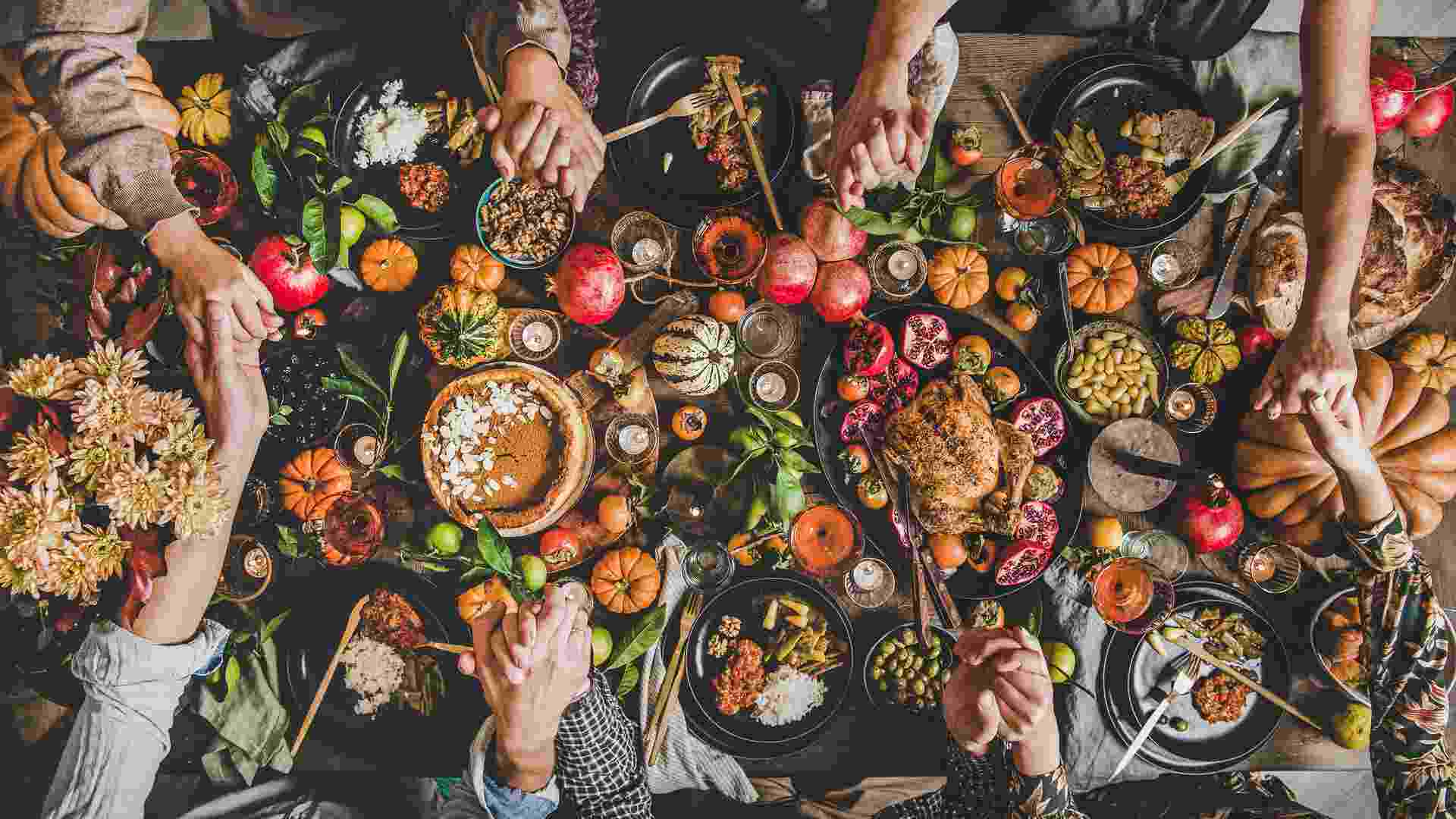
Is it better to split Thanksgiving Day or alternate years?
Neither is better. They solve different problems, and the honest answer depends on what your family actually needs more: simplicity or presence.
Alternating years is the simpler structure.
One parent has the whole day in even years, the other in odd years. There’s exactly one exchange point for the whole holiday — usually the night before or the morning after — and no mid-day handoff to coordinate. The cost is on the other side of the calendar: the parent without Thanksgiving that year gets none of it. No dinner, no parade. That’s a real loss, and it’s worth acknowledging. The schedule may be simple and workable, but that pretending it isn’t doesn’t mean it is painless for the parent who misses Thanksgiving with the children that year.
Splitting the day keeps both parents present every single year.
Nobody goes a full calendar year without any piece of Thanksgiving, which matters most to families where extended family on both sides expects to see the child annually regardless of the custody arrangement. The cost is real: an exchange in the middle of the most schedule-dense day of the fall, travel time eating into the actual holiday on both ends, and a transition that lands exactly when everyone involved is at the most emotionally loaded point of the day. More on why that cost is bigger than it looks in the next section.
Neither structure is a research-backed “best practice.” Anyone telling you one of these is what child development experts recommend is telling you more about their marketing than the evidence. What we can tell you from sitting across the table from families building these plans: alternating-year families tend to value predictability and a clean calendar over year-to-year presence, while splitting-the-day families tend to weigh “I saw my child on Thanksgiving” more heavily than how much of the day they got. Both are legitimate. Pick the one that’s actually true for your family, not the one that sounds more generous on paper.
From a parenting-coordination standpoint, I tend to think the third option, of alternating the entire holiday yearly is the best option. Starting from the release from school through the return of school immediately after the holiday when school recommences helps in high conflict or domestic violence situations so neither parent has to see or interact with the other. The times when Thanksgiving day or the entire holiday weekend becomes a hardship is when arguments or dinner/holiday time turns into trauma in an unhealthy home. Extended family can make holiday time significant and memorable for children, when they are a positive influence.
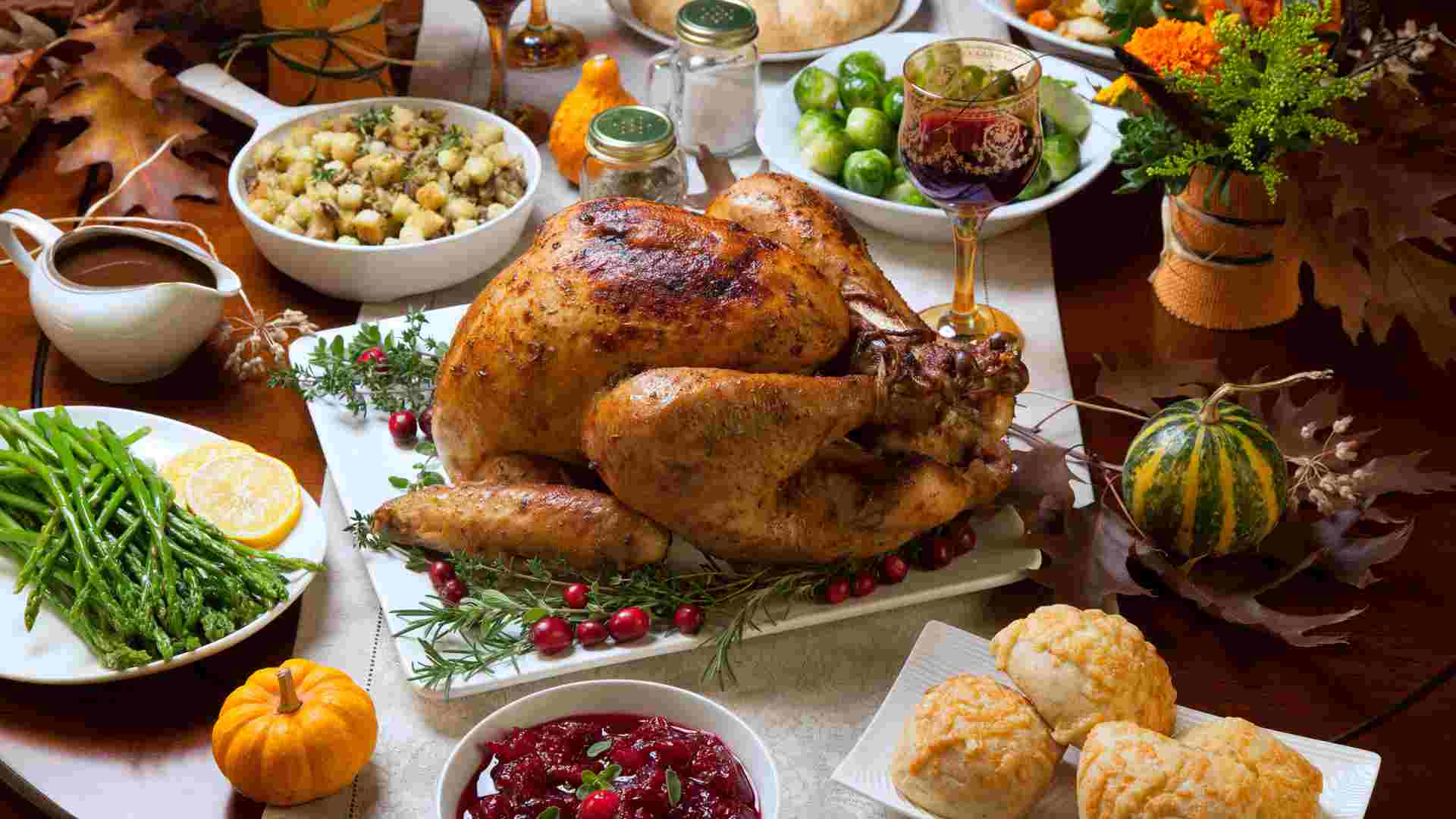
What is the “turkey day shuffle” and why do families move away from it?
The “turkey day shuffle” is what parents call the exchange-in-the-middle version of splitting Thanksgiving Day — and the reason families move away from it isn’t the reason you’ll read on most law firm blogs. It isn’t that research shows the shuffle harms children; no credible body of research says that, and the developmental guidance on transitions for younger children generally runs the other way. The real argument against the shuffle is structural, and it’s stronger than the claim it usually replaces.
Here’s the structural problem. Christmas has a peak: presents happen in the morning, so a parent who has the morning gets a genuine, complete piece of the holiday — the part that is, for most children, the actual point of the day. Thanksgiving has no single peak moment. The parade, the cooking, the meal, the collective nap in front of a football game, the leftovers that night — the whole day is the event, and it runs something like twelve hours from start to finish. Mix in so many other factors including the dessert bonanza, the collective dish washing event, and the oxytocin hit of lounging for hours together or playing board games is priceless.
That changes the math on splitting it. A child who leaves the first house at 2:00 p.m. doesn’t get half of Thanksgiving at each house. They get the front half of one Thanksgiving, and they arrive at the second house after the food is already cold and everyone there has settled into the couch-and-football part of the afternoon. Neither household actually hands the child the thing Thanksgiving is. That’s the honest case against the shuffle, and notice what it doesn’t claim: it doesn’t claim harm, and it doesn’t need a study to make the point. It’s just arithmetic about how the day is shaped.
Pair that with the one finding on divorce and children that is genuinely well established: ongoing parental conflict, not the divorce itself, is the most damaging factor for kids. Every exchange between households is an opportunity for that conflict to surface in front of the child — a late arrival, a disagreement about what time “2:00” meant, a comment one parent makes that the child carries into the second house. Splitting the day doesn’t just cost the child the shape of the holiday; it doubles the exchanges on the single most emotionally loaded day of the fall, which doubles the moments where the adults can go wrong in front of a child already navigating two houses on one hard day.
So the argument isn’t “the shuffle harms children.” The argument is narrower and holds up better: the shuffle costs the child the shape of the day, and it doubles the exchange points on the day where an exchange is most likely to go sideways. Let’s also note that it has huge potential to create additional conflict from exhausted, irritated parents who forgot to thaw the turkey. That’s worth fixing by negotiating it into your next order, not by treating this year’s Thanksgiving as a reason to go back to court. Plenty of standard North Carolina custody orders split Thanksgiving Day, and no judge is going to modify a working custody schedule because a parent read an article about a shuffle. If the structure isn’t working for your family, that’s a conversation for your next mediation or your next order revision — not an emergency motion in November.
Can we create a second Thanksgiving instead of dividing the first one?
Yes, and for a lot of families it’s the structure that actually works best — not the consolation-prize option it can feel like at first. A second Thanksgiving means the actual holiday stays intact at whichever household has it that year, while the other household builds a complete, separate celebration on a different day: the Saturday before, the Sunday after, whatever both calendars allow.
Say this directly, because a lot of parents carry real guilt about proposing it: a second Thanksgiving is a real holiday, not a lesser version of the first one. For a lot of children, it’s genuinely the better celebration, because nobody there is watching a clock — no “we need to leave by three,” no parent counting down the hours they have left. The turkey might get cooked on Saturday instead of Thursday, but the child still gets a full, unhurried day of the same food, people, and tradition. Plenty of families report their second Thanksgiving became the more relaxed, more memorable one specifically because the clock wasn’t running.
The trade-off is real: a second Thanksgiving only works if both households genuinely agree that it counts. If one parent privately treats the Saturday version as the “fake” one, or extended family openly disagrees that it’s a real Thanksgiving, the arrangement collapses from the inside, usually with the child absorbing the tension. This structure asks more of both households emotionally than alternating years does, even though it asks less of the calendar.
Janet J. Gemmell noted recently that her favorite fix for the second Thanksgiving dinner is to remind parents to purchase the dinner from a local restaurant if they are splitting the day so that the duty and obligations of cooking are reduced. “Have you seen the Thanksgiving 2026 Menu at Foster’s Market this year? You order no later than 12:00 pm on Sunday, November 22 and pick it up before Thanksgiving day for the joy of the meal without the effort of cooking it. They have been serving the Durham Community for over 30 years from their location at 2694 Durham-Chapel Hill Blvd.” This is one of the best ways to handle a second Thanksgiving day.
One practical note that applies to any structure: if your second Thanksgiving, or any variation on your holiday schedule, isn’t written into your actual custody order, it’s an informal agreement — not a court order — and it’s enforceable only to the extent you can prove it exists and prove what it said. A text thread confirming the plan is real evidence; a verbal understanding from a September phone call is much harder to enforce if one parent’s memory of it changes by November. If you’re deviating from what your written order says, even by mutual, friendly agreement, document it every time. That protects the agreement and protects both of you from a later misunderstanding being read as one parent violating the order.

If you’d like a neutral third party to help build a holiday plan both of you will actually hold to, that’s exactly what mediation is for: [MEDIATION_BOOKING_URL].
| Structure | How It Works | Best For | The Real Trade-Off |
|---|---|---|---|
| Alternating years | One parent has the full day in even years, the other in odd years | Families who value a simple calendar and one clean exchange point over year-to-year presence | The parent without the holiday that year gets none of it — no partial day |
| Splitting the day | The day is divided into two windows with a mid-day exchange | Families where both sides of extended family expect to see the child every single year | An exchange during the most emotionally loaded, least-flexible day of the fall — see the turkey day shuffle above |
| Second Thanksgiving | The actual day stays with one household; the other builds a full, separate celebration on a different day | Families who can genuinely agree the second celebration counts as real, not a lesser version | Requires real buy-in from both households — if either one treats it as fake, the arrangement breaks down |
What if the two households have different food, faith, or family traditions?
Difference between two households is not a problem that Thanksgiving needs to solve. It’s just what two households look like, and treating it as an obstacle usually creates more friction than the difference itself ever would.
Vegetarian and vegan households
can build a complete Thanksgiving around a plant-based centerpiece — a stuffed squash, a mushroom Wellington, a full spread of the traditional sides without the turkey — and it’s still Thanksgiving. The holiday isn’t the bird; it’s the gathering built around gratitude and a shared table. A child who eats turkey at one house and doesn’t at the other isn’t confused by that nearly as often as the adults worry they will be.
Families whose centerpiece was never turkey to begin with
— households built around a different main dish, a different set of sides, or a meal that reflects a specific regional or family food tradition — are still keeping the holiday. Thanksgiving in America has never had one required menu, and a household that celebrates it with tamales, curry, or a completely different spread is doing the holiday right, not doing it differently.
First-generation families
often layer their own family’s food and customs onto the American holiday rather than replacing one with the other, and both households doing this in their own way, separately, is a genuine strength rather than a scheduling complication. A child moving between a house that celebrates one way and a house that celebrates another is absorbing two traditions, not choosing between them.
Interfaith households
frequently treat Thanksgiving as the one holiday on the calendar that doesn’t require navigating whose faith tradition takes precedence, since it isn’t a religious holiday for either side — which is often exactly why it works well as a shared, low-conflict touchpoint even when other holidays on the calendar require more careful coordination.
None of this needs to be resolved into one uniform household practice. Two households doing Thanksgiving two different ways, generously and without either side treating the other’s version as lesser, is a completely normal and workable outcome for a child.
First Responders and Care Industry
parents often have to work on holidays as the frying of turkeys turns into a request for an EMS to visit you at your home and offer you a slightly expensive ride in an ambulance for burn treatment. This year, go ahead and order your meal in advance from Strong Arm Baking Company located at 117 Main Street, Oxford, North Carolina. A parent that serves others is often filled with gratitude for their health, happiness, and family on the holiday, even when everything does not run 100% on time.
Who decides which traditions our child is raised in?
This is a legal custody question, not a Thanksgiving-scheduling question — and it’s worth being precise about the difference, because the two get conflated constantly. Which household has the child on a given Thursday in November is a matter of physical custody and your holiday schedule. What faith, cultural practices, or family traditions a child is raised in more broadly is a matter of legal custody — the right to make major decisions about a child’s upbringing.
If you and your co-parent share joint legal custody, you generally both have a voice in the child’s ongoing religious and cultural upbringing, and neither parent can unilaterally decide that direction for the child without the other’s input. That doesn’t mean every single Thanksgiving needs to look identical in both houses — it means the larger question of how a child is being raised, faith-wise or culturally, isn’t one parent’s call to make alone if custody is shared. If one parent has sole legal custody, that parent generally does have the authority to make those calls. What your order says about legal custody — not what it says about the holiday schedule — is what actually controls this question.
In practice, the vast majority of families never need a court to weigh in on this. Two households running two different versions of a single holiday, or even raising a child within two different faith or cultural frameworks day to day, is common and workable without anyone needing to litigate it. Where it becomes a real legal custody issue is when one parent is trying to use control over holidays, or anything else, to unilaterally redirect the child’s broader religious or cultural upbringing against the other parent’s wishes, in a way your custody order doesn’t give them the authority to do. That’s a different, more serious conversation than “what do we eat on Thursday” — and it’s worth having with an attorney directly rather than trying to resolve it through the holiday schedule.
Thanksgiving Custody FAQ
Should we split Thanksgiving Day or alternate years?
There’s no universally correct answer. Alternating years is simpler and gives each parent a complete holiday every other year, at the cost of the other parent getting none of it that year. Splitting the day keeps both parents present every year, at the cost of a mid-day exchange on the most schedule-dense day of the fall. Choose based on what your family actually values, not on which option sounds more generous.
Is there a North Carolina law about how Thanksgiving custody has to work?
No. Holiday division in North Carolina comes from your custody order and local district practice, not from a statute. If your order doesn’t name Thanksgiving, it typically defaults to your regular week-to-week schedule for that day.
What is the “turkey day shuffle”?
It’s the term for splitting Thanksgiving Day into two windows with a mid-day exchange. Families move away from it not because of proven psychological harm, but because Thanksgiving has no single peak moment the way Christmas morning does — the whole day is the event — so a child exchanged partway through gets the front half of one celebration and arrives at the second after the meal is over or already fully satiated and needing a nap.
Can we do two Thanksgivings instead of splitting one?
Yes. One household keeps the actual day; the other builds a genuine celebration on a different day that weekend. For many children it’s the more relaxed of the two, precisely because no one is watching an exchange clock — but it only works if both households agree it’s a real Thanksgiving, not a lesser one.
Can we change our custody schedule just for the holiday?
You can agree to a one-time change without it being a permanent modification, but put it in writing — a text or email confirming the plan — every time. A verbal, undocumented agreement is enforceable only to the extent you can later prove it existed and what it said.
Does one bad Thanksgiving mean we need to go back to court?
No. A single difficult holiday is not the kind of substantial change a court looks for to modify an existing order. It’s a reason to negotiate different language and clauses into your next order — not a reason to file a motion this November.
Do we have to raise our child with the same traditions in both houses?
No. Two households can run different food, faith, or cultural traditions on their own time without either parent violating custody law. Which broader traditions a child is raised in long term is a legal custody — decision-making — question, and it only becomes a legal issue if one parent tries to unilaterally control that decision where custody is shared.
What if our extended families expect the child at the same time every year?
That’s a real pressure, but a family conversation, not a legal requirement. Telling extended family which years or which structure applies, well before November, usually resolves this faster than trying to satisfy everyone’s preferred timing every year.
The families who do this well are not the ones who get along best. They are the ones who decided early.
Download: The NC Holiday Custody Order Decoder — how to read your own order in ten minutes.
Need help building a holiday schedule that holds up?
Book Cape Fear Family Law as your mediator